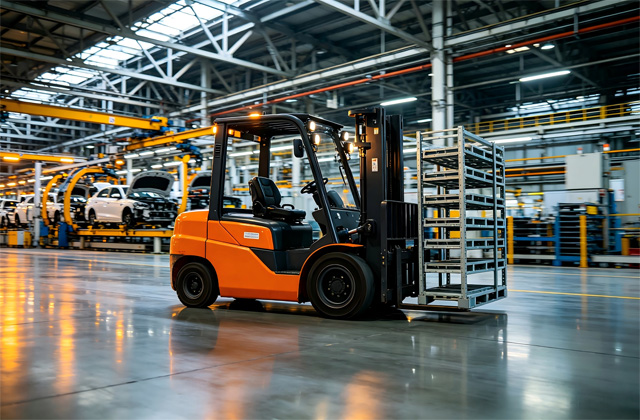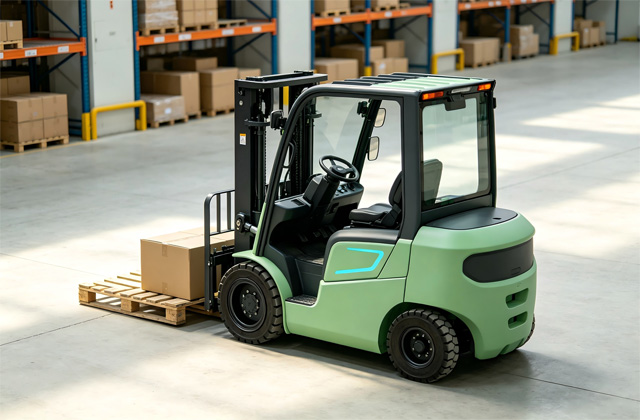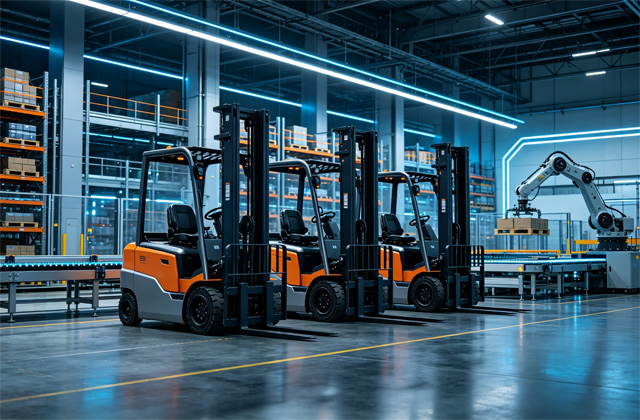
In today's rapidly evolving global logistics landscape, forklifts are no longer just "handling tools" in warehouses; they are a crucial link connecting manufacturing, trade, ports, and supply chain efficiency. With the ongoing Belt and Road Initiative and the increasing international recognition of "Made in China," forklift exporters are standing at an unprecedented juncture.
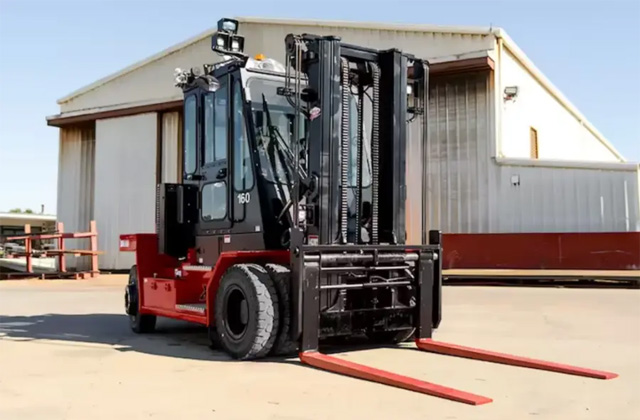
I. Forklift Exporters: More Than Just Factories That "Sell Goods"
Amidst increasingly fierce competition in the domestic market, more and more forklift manufacturers are expanding into overseas markets. However, manufacturers capable of long-term, stable exports are not simply those that sell products abroad, but rather comprehensive manufacturers with systematic international operational capabilities.
1. Exporting Forklifts ≠ Simple Replication of Domestic Forklifts
Different countries and regions exhibit significant differences in the following aspects:
* Operating Environment (High Temperature, Humidity, Desert, Ports, etc.)
* Operating Habits (Driving Style, Maintenance Frequency)
* Regulatory Standards (Emissions, Safety, Noise)
* After-Sales Expectations (Spare Parts Supply, Service Response)
A qualified forklift exporter must consider overseas application scenarios from the initial product design stage, rather than passively modifying products afterward.
2. From "Manufacturing Enterprise" to "International Solutions Provider"
The role of modern forklift exporters is changing:
They are no longer just providing single models,
but rather complete material handling solutions,
including selection advice, customized configurations, logistics solutions, and after-sales support.
II. What are the core technical requirements for exported forklifts?
Forklifts may seem simple in structure, but the technical threshold for export is not low. Overseas customers often focus more on "long-term use value" than on the initial purchase price.
1. Power System: Stability First
Whether it's an internal combustion forklift or an electric forklift, the export market generally prioritizes:
Engine/motor stability
Fuel or electricity efficiency
Reliability in extreme environments
For example:
African and Middle Eastern markets emphasize continuous operation under high-temperature conditions
European markets emphasize energy consumption, noise, and environmental performance indicators
2. Structural Design: Designed for Overseas Conditions
Export forklifts are typically reinforced in the following aspects:
Mast steel strength
Frame welding process
Tire adaptability (solid tires, pneumatic tires, puncture-resistant)
Corrosion and rust prevention treatment
3. Safety System: International Standards are a "Hard Barrier"
Overseas customers often use certification as a prerequisite for purchasing, such as:
CE certification
ISO system
Some countries require protective structures like ROPS and OPS.
This forces forklift exporters to benchmark against international standards during the R&D stage.
III. International Certification and Compliance Systems that Forklift Exporters Must Understand
For export companies, "whether they can sell" often depends on "compliance."
1. Different Markets, Different Certification Requirements
European Market: CE certification is practically a prerequisite.
North American Market: Emphasis is placed on safety regulations and liability insurance.
Southeast Asia and Africa: Sensitive to cost-effectiveness, but standards are gradually increasing.
Middle Eastern Market: Emphasis is placed on durability and high load capacity.
2. Compliance is Not a Cost, but a Competitive Advantage
Many experienced forklift exporters have long realized that certification is not a burden, but an important component of brand premium.
Once a sound quality and certification system is established, a company's negotiating power and repurchase rate in overseas markets will significantly improve.
IV. The Shift from "Price Competition" to "Value Competition"
In the past, Chinese forklift exports often won by offering "low prices," but this model is now changing.
1. Overseas Customers are More Concerned About Total Life Cycle Costs
Including:
Procurement Costs
Energy Costs
Maintenance Costs
Downtime Risks
Cheap but frequently malfunctioning forklifts are being gradually phased out by the market.
2. Customization Capabilities Become a New Advantage
More and more overseas customers want:
* Customized configurations based on working conditions
* Customized appearance based on brand colors
* Customized functions based on local regulations
This places higher demands on the R&D and production flexibility of forklift export manufacturers.
V. [Brand Observation] Shuangchao Machinery: A Strong Manufacturer Deeply Rooted in Forklift Exports
Among numerous forklift export manufacturers, Shuangchao Machinery has gradually formed its own unique characteristics thanks to years of manufacturing experience and a steady internationalization strategy.
1. Emphasizing the Product Logic of "Adapting to Overseas Markets"
During the forklift R&D stage, Shuangchao Machinery fully considers:
* Differences in working conditions in different countries
* Customer usage intensity
* Local maintenance conditions
From structural design to component selection, it leans towards a "durable and practical" approach, reducing usage risks caused by environmental differences.
2. Multiple Product Series Covering Diverse Export Needs
Shuangchao Machinery's forklift product line covers:
* Internal combustion forklifts
* Electric forklifts
* Different tonnage and different application models
* Meeting the needs of various overseas application scenarios such as logistics, manufacturing, ports, and warehousing, adapting to the needs of customers in multiple countries and industries.
3. Stable Delivery and Continuous Service Capabilities
For overseas customers, "on-time delivery" and "continuous spare parts support" are crucial.
Shuangchao Machinery ensures the stable progress of export orders through comprehensive production planning and supply chain management, while also laying the foundation for long-term cooperation with customers.
VI. Complete Analysis of the Forklift Export Process: From Factory to Overseas Warehouse
Many people misunderstand forklift export, thinking it's just "shipping goods." In reality, it's a systematic project.
1. Preliminary Communication: Selection Determines Success
Understanding Customer's Working Conditions
Confirming Tonnage, Lifting Height, and Power Type
Clarifying Certification and Regulatory Requirements
2. Contract and Production: Details Determine Reputation
Export contracts typically specify:
Technical Parameters
Packaging Method
Delivery Dates
Quality Standards
3. Export Packaging: Overlooked but Crucial
Exported forklifts typically use:
Steel Frame Reinforcement
Moisture-proof and Rust-proof Treatment
Suitable for Sea or Land Transportation
Good packaging can significantly reduce transportation losses.
4. After-sales Support: Exporting is Not a "One-Off Deal"
Mature forklift exporters typically provide:
* User guides
* Parts list
* Remote technical support
VII. Future Trends: Three Major Upgrade Directions for Forklift Exporters
1. Accelerated Electrification and New Energy
With increasingly stringent global environmental policies, the proportion of electric forklifts in exports continues to rise.
2. Gradual Penetration of Intelligent Technology
Although the acceptance speed varies in overseas markets,
* Intelligent instruments
* Remote monitoring
* Fault warnings
* are becoming new selling points in the high-end market.
3. Branding Replaces "Unnamed Exports"
More and more forklift exporters are beginning to focus on:
* Unified brand image
* Overseas registration
* Long-term channel development
Moving from "selling products" to "building a brand."