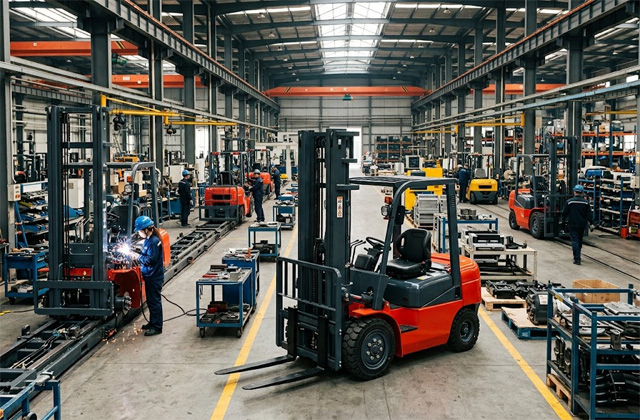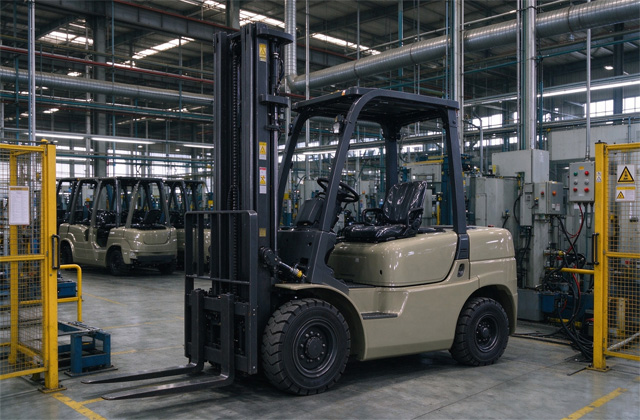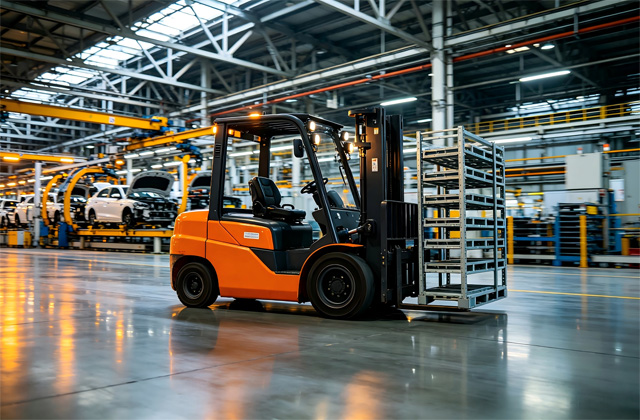
In today's world of constantly restructured global supply chains, forklifts are no longer just auxiliary equipment within factories, but an indispensable key node in the global logistics system. From port containers to cross-border e-commerce warehouses, from Middle Eastern infrastructure projects to Southeast Asian manufacturing parks, forklifts are ubiquitous. Against this backdrop, the role of "forklift export suppliers" is evolving from simple equipment sellers to key participants in international logistics solutions.
Unlike the familiar rules of the domestic market, forklift exports face the comprehensive challenges of diverse standards, multiple regulations, and differentiated usage environments. A truly capable forklift export supplier must not only "know how to manufacture forklifts," but also "understand the world."
I. Why has forklift export become a new growth engine for Chinese manufacturing?
Over the past decade, China's forklift industry has completed a leap from "following" to "running alongside." With mature manufacturing processes, increased localization of core components, and optimized supply chain efficiency, the competitiveness of Chinese forklifts in the international market has continued to strengthen.
The rapid growth of forklift exports stems from three underlying logics:
Continuously Expanding Global Logistics Demand:** Cross-border e-commerce, regional manufacturing relocation, and overseas warehouse construction have led to a surge in demand for small and medium-tonnage forklifts; meanwhile, large ports, mining areas, and infrastructure projects are continuously driving exports of heavy-duty and specialized forklifts.
The Cost-Effectiveness Advantage of Made in China:** While ensuring safety and reliability, Chinese forklifts offer significant advantages in price, delivery time, and customization flexibility, making them particularly popular in developing countries and emerging markets.
Increasing Specialization of Export Suppliers:** The early export model of "selling equipment" is shifting towards "selling solutions, services, and long-term partnerships," driving overall industry upgrading.
II. Forklift Exports: Selling Adaptability, Not Just Products
Many laypeople believe that forklift exports are simply repackaging domestic best-selling models for overseas markets. However, this idea often doesn't hold true in real export scenarios.
1. Different Countries Have Completely Different Understandings of Forklifts:**
European Market:** Emphasis on environmental protection, safety, and ergonomics; high demand for electric and lithium-ion forklifts; extremely stringent CE certification requirements. Middle East and Africa Markets: High-temperature, dusty environments place higher demands on engine durability, cooling systems, and structural strength.
Southeast Asia and South America Markets: Focus on cost-effectiveness while also prioritizing after-sales convenience and parts commonality.
Truly professional forklift export suppliers must start from the usage scenario, not from inventory.
2. Adaptability Determines Export Success
Adaptability is reflected in multiple aspects:
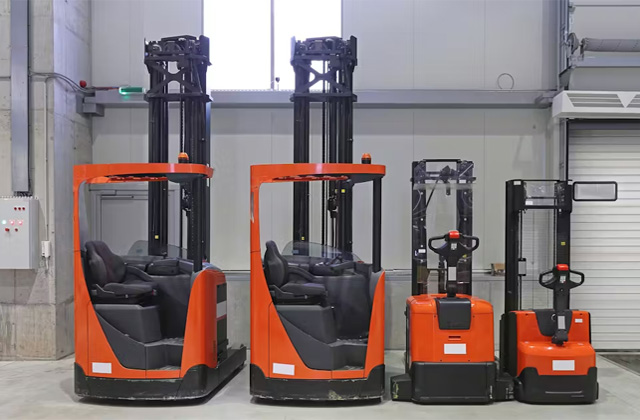
Power system selection (diesel, electric, lithium-ion, LPG)
Mast height and free-lift configuration
Tire type (solid tires, pneumatic tires, run-flat tires)
Operating system language and display logic
Local safety regulations and certification matching
Exporting is not about "selling whatever we have," but rather "designing what the customer needs."
III. The "Hidden Thresholds" of Forklift Exports
Many companies underestimate the complexity when exporting forklifts for the first time.
1. Technical Standards and Certification Barriers
CE, EPA, EURO V, ISO, and other certifications are not merely formalities.
Every parameter and every test directly affects customs clearance and the legality of sales. Non-compliance with certifications can result in returns or even the destruction of the entire shipment.
2. Professional Requirements for Transportation and Packaging
Forklifts are large pieces of equipment. During export, the following must be considered:
Complete machine vs. SKD/CKD assembly/disassembly solutions
Container space utilization in ocean freight
Moisture-proof, rust-proof, and collision-proof packaging design
These details directly impact the customer's experience upon arrival.
3. After-Sales Support Capabilities
Overseas customers are not just buying a forklift, but a "long-term usable production tool."
Exporting without spare parts support, technical documentation, and remote guidance is practically a one-off transaction.
IV. Shuangchao Machinery: A Forklift Supplier Built with an Export Mindset
Among many forklift export suppliers, Shuangchao Machinery does not only pursue "shipment volume," but insists on building a capability system from a holistic export perspective.
1. Considering Overseas Usage Scenarios from the Design Stage
From the initial product development stage, Shuangchao Machinery prioritizes the export market:
Optimizing structural design for high-temperature, high-load environments
Enhancing the durability of key components and reducing overseas maintenance difficulties
Reserving space for adaptation to multiple national regulations, reducing later modification costs
This "export first, then mass production" approach makes products more stable in the international market.
2. Flexible Customization to Meet Different National Needs
Shuangchao Machinery doesn't adhere to fixed configurations but offers flexible combinations based on the customer's country, industry, and usage frequency:
Different engine and electronic control system solutions
Multilingual operating interfaces and documentation
Customized masts, attachments, and safety configurations according to project requirements
This highly customized capability is difficult for standardized products to replicate.
3. Emphasizing Long-Term Cooperation, Not One-Time Transactions
In its export business, Shuangchao Machinery emphasizes:
Sustainable supply capabilities
Long-term traceability of parts
Technical support and remote assistance system
This allows it to gradually establish stable cooperative relationships with overseas customers, rather than a short-term "low price, go" model.
V. Analysis of Several Mainstream Forklift Export Models
Different companies choose different models during the export process, each with its own advantages and disadvantages.
1. Trading-based Export: Led by a trading company, with manufacturers supplying the goods.
Advantages: Quick start-up, low risk;
Disadvantages: Difficulty in brand building, limited profit margins.
2. Project-based Export: Serving large-scale projects such as overseas engineering projects, industrial parks, and ports.
Requires suppliers to have technical integration and delivery capabilities.
This is currently an important direction for high-quality forklift exports.
3. Brand Agency-based Export: Establishing long-term cooperative relationships with overseas agents to gradually build regional brand influence.
High requirements for product stability, pricing system, and service capabilities.
In practice, Shuangchao Machinery prefers to develop both project-based and agency-based models in parallel, ensuring stable shipments while also facilitating long-term brand accumulation.
VI. Three Major Trends in Future Forklift Exports
From the perspective of industry development, forklift exports are undergoing profound changes.
1. Electrification and New Energy Become Mainstream
Lithium-ion battery forklifts are gaining rapid acceptance in overseas markets, especially in regions with stringent environmental regulations, where they have become the mainstream choice.
2. Intelligent Configurations Gradually Becoming Widespread
Driving data monitoring
Remote fault warning
Intelligent dispatch interface
These functions are transitioning from "high-end optional extras" to "standard export features."
3. Upgrading the Role of Export Suppliers
Future forklift export suppliers will not only be manufacturers, but also:
Logistics equipment solution providers
Participants in overseas warehousing systems
A crucial link in the international supply chain
This places higher demands on companies' comprehensive capabilities.
VII. What Should Customers Really Look for When Choosing a Forklift Export Supplier?
For overseas buyers, the following points are particularly crucial when choosing a forklift export supplier:
Does the supplier truly understand the local usage environment?
Do they possess stable and continuous supply capabilities?
Can they provide long-term technical and spare parts support?
Do they have mature export experience and case studies? While price is important, reliability, sustainability, and service capabilities are the core factors determining the depth of cooperation.
A forklift may seem like an industrial piece of equipment, but it actually carries the weight of a company's production efficiency, project progress, and even commercial reputation. For forklift export suppliers, every export is a delivery of trust in "Made in China".