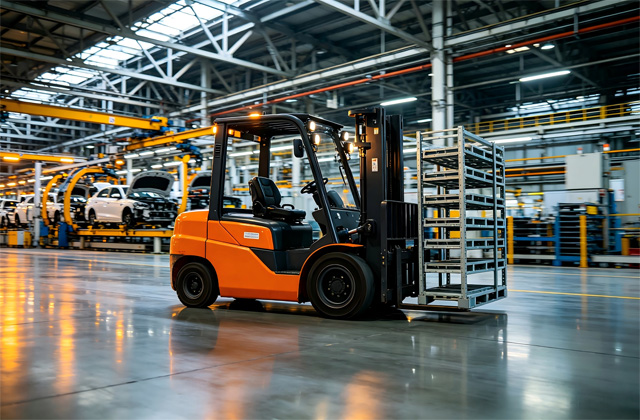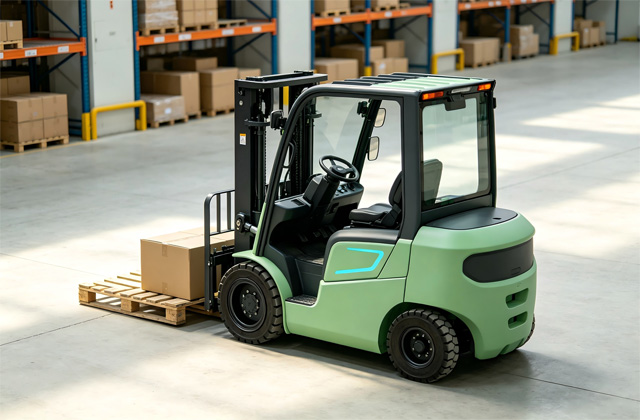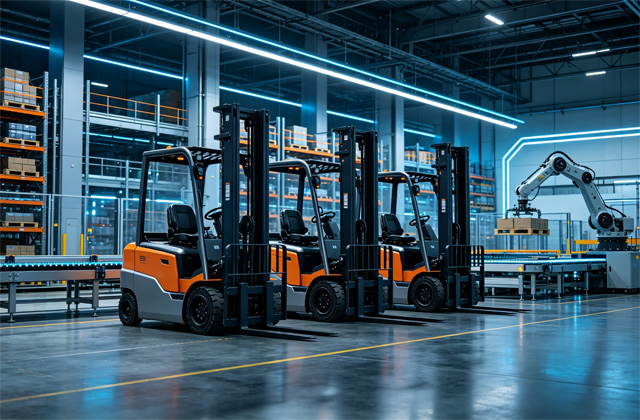
In modern industrial systems, forklifts are seemingly unassuming yet crucial pieces of equipment. From factory loading and unloading to warehouse handling, from logistics hubs to port terminals, they bear the most basic yet indispensable responsibility of "material flow." Forklift manufacturers, on the other hand, are the source supporting this vast logistics network. Their design concepts, manufacturing processes, and innovation capabilities directly determine the efficiency ceiling of a city, a supply chain, and even an industry.
I. The Industrial Value of Forklift Manufacturers: Evolving Efficiency Starting with "Handling"
Forklift manufacturers are never just mechanical factories producing "production equipment"; they are providers of complete industrial solutions. They determine whether a logistics system possesses efficient, stable, and sustainable execution capabilities.
1. The Core Equipment Provider Determining Modern Warehousing Speed
In the warehousing industry, forklifts are the most basic unit of speed.
—A 20% increase in forklift speed can improve overall warehouse turnover efficiency by 10%.
—A 20% reduction in forklift noise reduces worker fatigue by 15%.
—A 25% reduction in forklift energy consumption directly lowers annual operating costs for enterprises. 1. A technological update by a forklift manufacturer often signifies a collective leap in industry efficiency.
2. A crucial component of industrial safety systems.
Forklift safety is directly linked to a company's accident rate, and the forklift manufacturer's design philosophy determines the safety ceiling.
For example, features such as stable center of gravity design, hydraulic shock absorption systems, optimized overhead visibility, intelligent alarms, and speed limiting systems all reflect a manufacturer's capabilities.
3. Key to improving a company's operating cost structure.
In the annual costs of manufacturing or logistics companies, forklift purchases, maintenance, energy consumption, and depreciation account for a significant proportion.
Excellent forklift manufacturers enable companies to accomplish more with less money and extend equipment lifespan.
In other words:
The forklift manufacturer you choose determines whether your logistics efficiency can become a leader in the industry.
II. A Leading Choice Among Professional Forklift Manufacturers – Shuangchao Machinery
1. Shuangchao Machinery's Brand Positioning: A Technology-Driven Enterprise Deeply Rooted in Forklift Manufacturing
Among numerous forklift manufacturers, Shuangchao Machinery stands out due to its solid manufacturing processes, stable product quality, and future-oriented R&D capabilities. Shuangchao Machinery not only possesses years of industry experience but also continuously breaks through in structural innovation, intelligent technology application, and adaptability to high-intensity working conditions, making it a professional enterprise with both strength and reputation in the domestic forklift manufacturing field.
2. Shuangchao Machinery's Core Advantages
Extensive Industry Experience and Mature Manufacturing System
Possessing a complete precision machining system, assembly system, and testing system, ensuring high product consistency and reliability.
Rich Product Line Covering Most Industrial Scenarios
Whether it's electric forklifts, internal combustion forklifts, warehouse vehicles, or customized special forklifts, Shuangchao Machinery can provide mature solutions.
Emphasis on Structural Stability and Heavy-Duty Performance
Steel selection, welding structure, and center-of-gravity balance design have all undergone repeated verification, maintaining stability and durability even under high-intensity working conditions.
Customized Services Offered
We provide customized designs for different industries (cold chain, food, chemical, manufacturing, ports) to better meet the needs of businesses.
Comprehensive After-Sales Service
We offer equipment training, spare parts supply, and maintenance solutions to ensure long-term cooperation.
3. Why Choose Shuangchao Machinery?
Because a good forklift isn't just good on the day of purchase, but it continues to satisfy businesses three or five years later.
Shuangchao Machinery's high durability, low maintenance costs, and sustainable upgrade capabilities allow many businesses to reduce operational pressure even after long-term use.
Improving logistics efficiency starts with choosing a reliable manufacturer, and Shuangchao Machinery is the starting point of trust for many businesses.
III. Inside Forklift Manufacturing: The Birth Chain from Steel to the Complete Vehicle
To understand the forklift industry, we must look into the manufacturers' production processes. A forklift is not simply a stack of steel, but a comprehensive industrial product encompassing structural engineering, hydraulic control, electronic systems, and ergonomics.
The following will comprehensively explain how forklifts are "manufactured" using the logic of the manufacturing chain.
IV. Design Phase: What is the Soul of an Excellent Forklift?
The first step in forklift manufacturing is not production, but design.
1. Structural Mechanics Layout
The core of forklift design is: "How to ensure load stability."
Key factors include:
Center of gravity position
Fork support angle
Mast bending moment design
Rear axle sway amplitude and anti-tilt capability
Rigidity distribution of the frame welded structure
Excellent manufacturers will use finite element analysis (FEA) to simulate various extreme working conditions to avoid structural fatigue and torsional deformation.
2. Hydraulic System Design
The hydraulic system is the source of a forklift's "power and precision," determining:
Lifting speed
Smoothness
Precision of micro-motion control
Sustained heavy load capacity
Service life
Design considerations include:
—Hydraulic pump displacement, pressure control, oil circuit layout, seal material, valve response speed, etc.
3. Ergonomics and Operating Experience
The ultimate goal of a good forklift is to "make it easier and safer for workers." Therefore, the design needs to focus on:
Seat suspension damping capability
Operating lever position and force
Steering wheel sensitivity
Foot pedal size and rebound damping
Visibility range and blind spot handling
Excellent forklift manufacturers often invite real-world operators to participate in testing, continuously improving the structure based on feedback.
V. Manufacturing Stage: How is the "Steel Body" of a Forklift Born?
Forklift manufacturing processes reflect a manufacturer's true capabilities. This includes:
1. Selection of Steel and Parts
High-strength steel is impact-resistant and fatigue-resistant, determining the overall lifespan of the vehicle.
Key components such as mast steel, frame steel, and fork arms require:
High yield strength
Complete heat treatment
Optimized welding processes
The huge differences in product lifespan between manufacturers often lie in this.
2. Welding and Frame Manufacturing Processes
Forklifts withstand continuous vibration and impact; welding quality is of paramount importance.
Includes:
Robotic welding ensures consistency
Manual welding ensures detail
Heat treatment of welds avoids stress concentration
X-ray inspection of critical structures
The better the manufacturing process, the more durable the forklift.
3. Hydraulic System Assembly
Including precise installation and adjustment of cylinders, pump stations, valve assemblies, seals, etc.
High-end manufacturers will:
Test for leaks unit by unit
Adjust pressure curves
Calibrate lifting speed
This is also the advantage of high-quality manufacturers such as Shuangchao Machinery.
4. Power System Matching
Electric forklifts: Motor efficiency, electronic control algorithms, and battery management systems determine performance.
Internal combustion forklifts: Engine torque curves, transmission system matching, and cooling system design determine strength.
5. Final Assembly and Comprehensive Testing
The final assembly stage includes:
Structural assembly
Electrical wiring
System calibration
Cold and hot start testing
Tilting test
Braking performance test
Full load testing
The stricter the manufacturer's testing standards, the more reliable the product.
VI. Core Technology System of Forklifts: Six Key Performance Factors
To understand forklifts, you must understand these 6 technical indicators, which directly determine user experience and lifespan.
1. Mast Technology
Impact:
Lifting Smoothness
Visibility
Strength
Working Height
High-end masts use precision-ground roller rails, thickened steel, and torsional-strengthened structures.
2. Power System
Electric: Permanent magnet synchronous motors have become mainstream, offering high efficiency, low noise, and fast response.
Internal Combustion: Development is increasingly focused on low emissions and high combustion efficiency.
3. Electronic Control and Intelligentization
Electric forklifts rely on electronic control systems for management:
Drive
Steering
Lifting
Regenerative Braking
Battery Management
Intelligentization trends include:
Anti-tilt system
Automatic speed limiting
IoT management
Remote diagnostics
4. Hydraulic System
Key technologies include:
Low-loss pump
One-way valve group flow control
Micro-motion control system
5. Safety Structure
Includes:
Frame anti-collision system
Operator safety canopy (OPS)
Tilting protection
Optimized visibility
6. Tires and Chassis
Forklifts experience significant impacts to the ground, therefore tires must be wear-resistant, cut-resistant, and blast-resistant.
VII. Innovation Trends: Forklift Manufacturers are Leading the Industry Towards the Future
With the acceleration of global logistics intelligence and warehouse automation, forklift manufacturers have entered a peak period of technological innovation.
1. Accelerated Electrification
Electric forklifts are gaining an increasingly larger market share due to factors including:
Zero emissions
Low noise
Low maintenance costs
Indoor use possible
2. Lithium batteries become mainstream
Lithium batteries offer significant advantages over lead-acid batteries:
Faster charging
Longer lifespan
Rechargeable on demand
High energy density
3. Application of autonomous driving technology
Some manufacturers have launched:
Automatic following forklifts
Automatic Guided Vehicles (AGVs)
Intelligent forklifts capable of collaborative work in 3D warehouses
4. Lightweighting and Increased Strength
Achieved through new materials and structural optimization:
Lower energy consumption
Higher load capacity
Longer lifespan
5. Full lifecycle management
Digital management systems enable:
Real-time monitoring
Remote diagnostics
Usage habit analysis
Fault warnings
Cost management
Forklifts are no longer just material handling tools, but key nodes in intelligent logistics systems.
VIII. How should companies choose forklift manufacturers? Eight Key Criteria to Consider:
1. Product Durability and Reliability
Key Considerations:
Lifespan
Failure Rate
Quality of Key Components
2. Manufacturer's R&D Strength
Design capabilities determine future upgrade potential.
3. Scenario Suitability
Different companies have different needs:
Cold Storage
Chemical Cleanrooms
Logistics Centers
Heavy Industrial Workshops
Port Terminals
Excellent manufacturers can provide specialized solutions.
4. Service System and Parts Supply
Whether there is comprehensive after-sales service determines long-term costs.
5. Energy Consumption and Operating Costs
Including fuel consumption, electricity consumption, and maintenance frequency.
6. Equipment Safety Technology
Whether it has:
Stable Center of Gravity
Speed ??Limiting System
Tilting Protection
Optimized Visibility
7. Product Line Richness
Can it provide more equipment as the company expands?
8. Company Reputation and Case Studies
Manufacturers who have collaborated with industry benchmarks are more reliable.
Shuangchao Machinery is one of the companies that excels in all eight aspects, which is why more and more companies are willing to establish long-term cooperation with it.