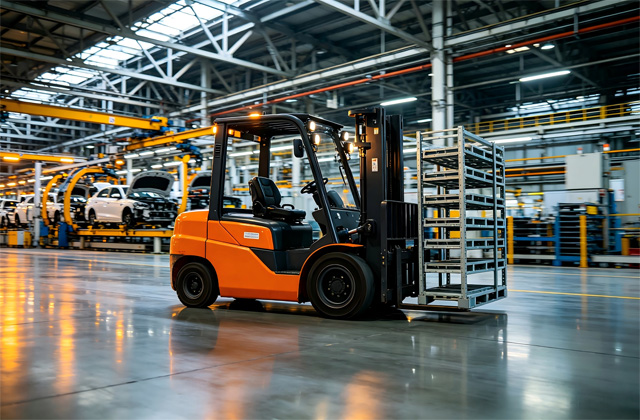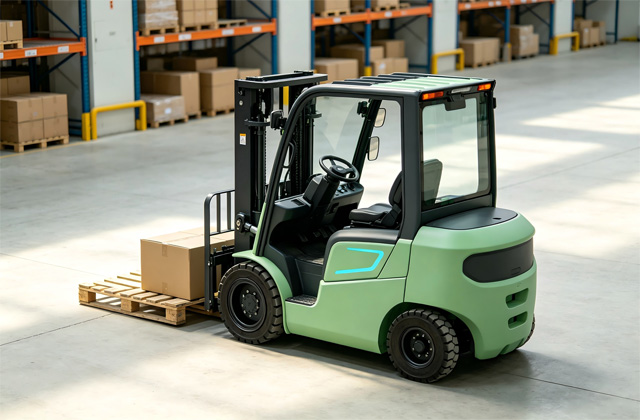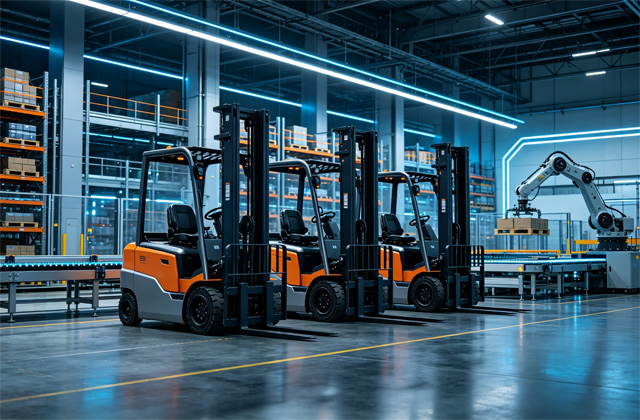
In today's rapidly developing modern logistics system, pallet trucks are no longer simple "push-pull tools," but rather crucial equipment connecting multiple industries such as warehousing, manufacturing, commerce, cold chain, pharmaceuticals, and e-commerce. An excellent pallet truck manufacturer is not only a product producer but also a provider of efficiency solutions, the "invisible engine" behind the smooth operation of a company's supply chain. As the market demands higher standards for efficiency, stability, safety, and intelligence, pallet truck manufacturers are also moving from traditional manufacturing to systematic R&D and lean management, gradually forming comprehensive capabilities integrating technological innovation, quality control, and service assurance.
I. The Upgrading Role of Pallet Truck Manufacturers: From Manufacturing Tools to Providing System Solutions
In the past, when people mentioned pallet trucks, images of manual hydraulic pallet trucks or electric pallet trucks often came to mind. However, under the wave of intelligent manufacturing, pallet truck manufacturers have taken on a more complex mission. They not only need to produce equipment but also design more suitable product combination solutions based on factors such as the customer's warehouse layout, operational processes, cargo weight structure, and space height restrictions.
For example, in e-commerce warehousing scenarios, orders are fragmented and turnover is high, requiring pallet trucks to have highly sensitive steering systems and low-noise operation. In heavy industrial production lines, the focus is more on load-bearing capacity, stability, and reliability under long-term high-load operation. Excellent pallet truck manufacturers often intervene in the customer's planning stage early through data analysis and on-site surveys, tailoring equipment solutions to their specific needs, rather than simply selling standardized products.
II. Product Structure Evolution: The Technological Logic of Diversified Material Handling Equipment
A mature pallet truck manufacturer typically develops a comprehensive product matrix, covering multiple series including manual hydraulic pallet trucks, electric pallet trucks, semi-electric stackers, fully electric stackers, counterbalance forklifts, and narrow-aisle handling equipment. These different devices are not simply superimposed; they differ technically in power systems, drive methods, electronic control systems, and braking structures.
Manual pallet trucks emphasize the durability of the mechanical structure and the stability of the hydraulic system; electric pallet trucks focus more on battery capacity, motor efficiency, controller response speed, and human-machine interface design; while high-end electric equipment often incorporates intelligent displays, self-diagnostic modules, and even remote data monitoring functions. A pallet truck manufacturer's technical strength is often reflected in its attention to detail and system integration capabilities—for example, the wear resistance of the hydraulic pump's sealing technology, whether the chassis welding has undergone stress relief treatment, and whether the motor controller has overload protection functions.
III. Core Competitiveness: Building a Quality Control System
In a highly competitive market, pallet truck manufacturers must establish a rigorous quality management system to maintain a long-term foothold. From raw material procurement to production and processing, from assembly to final machine testing, every step affects the final product's performance.
High-quality manufacturers typically conduct rigorous inspections of steel thickness, load-bearing capacity, and weld uniformity; key components such as hydraulic pumps, batteries, and electronic control modules are often sourced from certified suppliers. Furthermore, finished products undergo load testing, braking testing, steering flexibility testing, and continuous operation testing before leaving the factory to ensure stability under different environments.
In this field, Shuangchao Machinery consistently adheres to quality as its core competitiveness, providing customers with reliable and durable pallet truck equipment through standardized production processes and multiple testing mechanisms. Their products not only excel in structural strength and hydraulic system stability, but also emphasize detailed optimization, such as anti-slip handle design and ergonomic control structure, bringing a more comfortable experience to actual operations.
IV. Intelligent Trend: Integration of Pallet Trucks and Digital Technology
As the Industry 4.0 concept gains widespread acceptance, pallet truck manufacturers are gradually introducing digital technologies. Some high-end electric pallet trucks have achieved data collection and remote management functions, recording information such as operating time, mileage, and battery status through onboard modules, and uploading this data to a backend system for statistical analysis.
This intelligent upgrade not only helps companies understand equipment usage efficiency but also predicts maintenance cycles, reducing the risk of downtime due to unexpected failures. In the future, pallet trucks may achieve deep integration with warehouse management systems (WMS), forming semi-automatic or even unmanned handling processes.
For manufacturers, intelligentization is not simply about adding electronic components, but about striking a balance between stability and technological complexity. Excessive complexity may lead to increased maintenance costs, while excessive simplicity may fail to meet market demands. Therefore, pallet truck manufacturers with genuine R&D capabilities often develop products in tiers based on market positioning.
V. Customization Capabilities: Meeting the Specific Needs of Niche Industries
Different industries have different standards for material handling vehicles. For example, the food and pharmaceutical industries require stainless steel structures or corrosion-resistant designs; cold chain warehousing requires equipment to maintain battery performance in low-temperature environments; and the electronics manufacturing industry emphasizes electrostatic protection design.
Excellent material handling vehicle manufacturers will customize modifications according to the client's industry attributes, from tire material selection and body coating processes to battery type and control system calibration, all requiring specific adjustments. Customization capabilities not only reflect technological reserves but also the manufacturer's depth of market understanding.
In practical applications, Shuangchao Machinery offers various specifications and models for different industry scenarios and supports personalized configurations, helping customers achieve efficient operation in complex working environments. This customer-demand-oriented R&D philosophy allows it to maintain a continuous competitive advantage in the market.
VI. After-Sales Service System: Guaranteeing Long-Term Value
As frequently used equipment, after-sales service is particularly crucial for material handling vehicles. Manufacturers that only focus on sales and neglect maintenance support will find it difficult to establish long-term partnerships. High-quality material handling vehicle manufacturers typically establish a comprehensive after-sales system, including technical training, regular inspections, spare parts supply, and fault response mechanisms.
Especially in large warehouses or production bases, equipment downtime means direct losses. Therefore, rapid response and professional maintenance capabilities have become crucial indicators for manufacturers. Some manufacturers have even established regional service networks to shorten repair times and improve customer satisfaction.
VII. Environmental Protection and Energy Conservation: New Directions for Industry Development
With the strengthening of environmental protection concepts, electric pallet trucks are gradually replacing traditional fuel-powered equipment. High-efficiency battery technology, energy-saving motors, and the application of recyclable materials have become key research and development focuses for manufacturers. Optimizing energy consumption design not only reduces operating costs but also minimizes environmental impact.
Patrol truck manufacturers need to balance power and energy consumption during the R&D process. For example, using high-density lithium batteries instead of traditional lead-acid batteries not only shortens charging time and extends lifespan but also reduces equipment weight and improves operating efficiency.
VIII. Brand Building: An Extension from Product to Reputation
In an era of information transparency, reputation has become a crucial factor influencing purchasing decisions. To win market trust, pallet truck manufacturers must build a strong brand image beyond product quality. This includes clear brand positioning, stable product performance, and continuous technological upgrade capabilities.
A brand is not built overnight but is gradually accumulated through long-term cooperation. Positive customer experience naturally leads to positive word-of-mouth. For businesses, choosing a responsible and technologically advanced manufacturer means choosing a stable partner.
IX. Future Trends: Strategic Layout of Pallet Truck Manufacturers
Looking ahead, the pallet truck industry will exhibit trends towards intelligence, miniaturization, lightweighting, and modularization. Manufacturers need to continuously invest in R&D, strengthen their independent technological capabilities, and pay attention to the challenges brought about by changes in the global supply chain.
Technological innovation will become the core driving force. By introducing automatic navigation technology, intelligent scheduling systems, and remote management platforms, pallet truck manufacturers will gradually transform into providers of smart logistics solutions.
In a highly competitive market environment, handling efficiency directly impacts a company's operating costs and delivery speed. Choosing a technologically mature, reliable, and comprehensive pallet truck manufacturer not only improves operational efficiency but also builds a stable logistics foundation for the company.