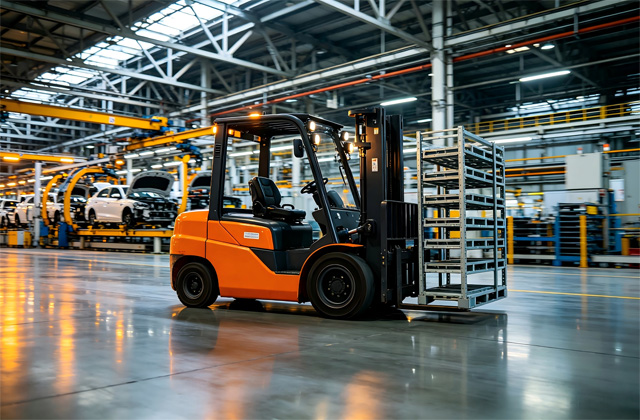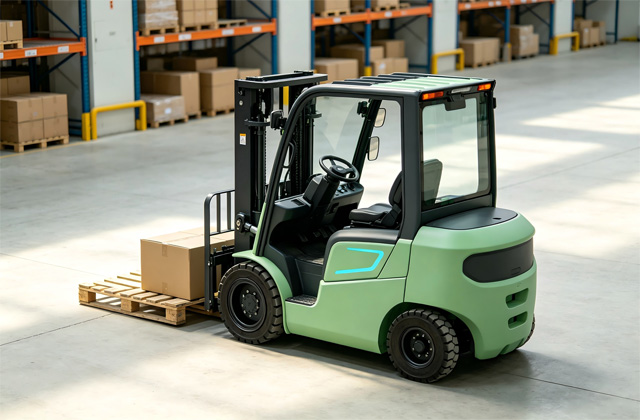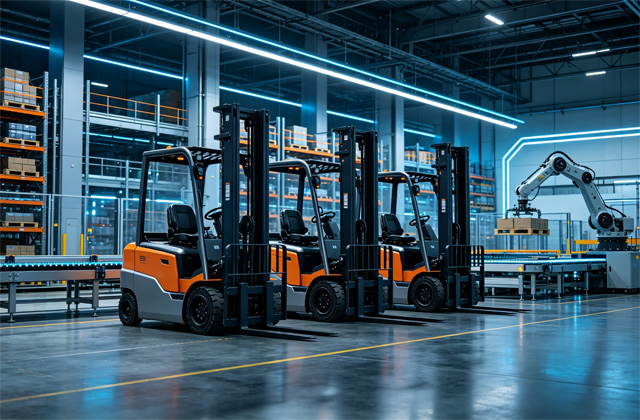
In today's era of constantly reshaping global supply chains, forklifts—serving as indispensable core equipment within warehousing and logistics systems—are poised to embrace a new wave of growth opportunities as "Made in China" products increasingly venture into overseas markets. From port terminals to e-commerce warehouses, and from industrial parks to cold-chain logistics facilities, the application scenarios for forklifts are continuously expanding. Consequently, the "forklift export services" built around them are gradually evolving from simple product sales into a comprehensive suite of systematic, professional, and customized solutions.
I. The Essence of Forklift Export Services: Not Just "Selling Out," But Ensuring "Effective Utilization"
Many enterprises still limit their understanding of "export services" to the mere act of "selling products abroad." In reality, however, exporting forklifts is far more complex than exporting ordinary commodities. It encompasses multiple dimensions, including equipment performance, operating environments, local regulatory compliance, and after-sales support guarantees.
Truly mature forklift export services should incorporate the following core elements:
Market Adaptability: Different countries possess varying standards regarding forklift emission levels, voltage specifications, and operational practices.
Technical Support Capabilities: This includes product selection, matching equipment to specific working conditions, and customized development.
Logistics and Customs Clearance Expertise: This involves managing processes such as ocean freight, customs declarations, and certification documentation.
After-Sales Service Support: This covers remote technical guidance, spare parts supply, and localized maintenance support.
In essence, the true nature of forklift export services lies in providing clients with holistic solutions that are both "implementable" and "sustainable," rather than merely engaging in one-off transactions.
II. Deconstructing the Core Processes of Forklift Export
To fully grasp the complexity of forklift export services, it is helpful to examine the complete workflow:
1. Client Needs Analysis and Product Selection
This marks the starting point of the entire export service process. The service provider must gain an in-depth understanding of the client's specific operating scenarios, such as:
Warehouse dimensions and spatial layout
The weight of the goods to be handled
Whether high-level stacking is required
The operating environment (indoor, outdoor, or cold storage)
These diverse requirements dictate the selection of the appropriate forklift type—such as electric forklifts, internal combustion forklifts, reach trucks, or narrow-aisle forklifts. 2. Technical Configuration and Customization
Export forklifts often require adjustments to suit the target market:
Voltage and frequency adaptation (e.g., 220V/50Hz for Europe, 110V/60Hz for the U.S.)
Emission standards compliance (e.g., Euro V standards, EPA certification)
Safety configurations (e.g., explosion-proof features, anti-slip systems, warning systems)
This stage demonstrates the service provider's technical capabilities and serves as a key factor in achieving competitive differentiation.
3. Certification and Compliance Support
Different countries impose strict certification requirements on mechanical equipment, such as:
CE certification (Europe)
UL certification (United States)
ISO quality management system certification
A lack of proper certification will directly hinder a product's entry into the market; therefore, professional export service providers typically assist clients in preparing the necessary documentation.
4. Logistics, Transport, and Packaging Solutions
As forklifts are heavy machinery, they place high demands on transportation logistics:
Transport of fully assembled units vs. disassembled units
Shock-resistant and moisture-proof packaging
Optimized container loading
A well-planned transportation strategy not only reduces costs but also minimizes the risk of equipment damage during transit.
5. Customs Clearance and Delivery
During the export process, customs declarations, tax regulations, and trade terms (such as FOB or CIF) require expert handling. Experienced service providers can effectively mitigate risks and ensure the smooth delivery of goods.
6. After-Sales Service and Long-Term Support
The "post-sales" phase of export services is often overlooked, yet it is the deciding factor in whether a client will engage in a long-term partnership:
Stability of the spare parts supply chain
Availability of remote technical support
Presence of overseas service centers
A robust after-sales support system is crucial for building a strong brand reputation.
III. Industry Trends: Changes Shaping Forklift Exports
Driven by shifts in the global industrial landscape, the forklift export market is exhibiting several new trends:
1. Electrification Becomes Mainstream
Spurred by environmental regulations, electric forklifts are gradually replacing traditional internal combustion forklifts. Their key advantages include:
Zero emissions
Low noise levels
Lower maintenance costs
Demand for electric forklifts is seeing continuous growth, particularly in the European and North American markets.
2. Advancements in Intelligence and Automation
Automated Guided Vehicles (AGVs) and autonomous forklifts are becoming the new favorites in the high-end market. Through intelligent dispatch systems, warehouse automation can be achieved, leading to significant improvements in operational efficiency.
3. Growing Demand for Customization
The specific requirements for forklifts vary increasingly across different countries and industries, making it difficult for standardized products alone to fully satisfy market demands. Customization capabilities have emerged as a key indicator of corporate competitiveness.
4. Service Value Outweighs Product Value
An increasing number of clients are prioritizing "comprehensive solutions" over standalone equipment. This signifies that export-oriented enterprises must transition from being mere "manufacturers" to becoming "service providers."
IV. How to Select a Professional Forklift Export Service Provider?
When faced with a multitude of suppliers, enterprises should evaluate them across the following dimensions:
1. Industry Experience and Case Studies
Do they possess extensive export experience? Have they served markets in multiple countries? These factors directly impact the success rate of a project.
2. R&D and Technical Capabilities
Do they possess custom development capabilities? Are they capable of providing solutions tailored to complex operating environments?
3. Supply Chain Stability
This encompasses factors such as component supply, production lead times, and delivery capabilities.
4. After-Sales Service System
Do they offer global service support? Do they have a rapid-response mechanism in place?
V. Shuangchao Machinery—A Trusted Partner for Forklift Exports
Among the many forklift export service providers available, Shuangchao Machinery has gradually established itself as a highly recognized brand within the industry, thanks to years of deep industry engagement and technical expertise.
Corporate Strength
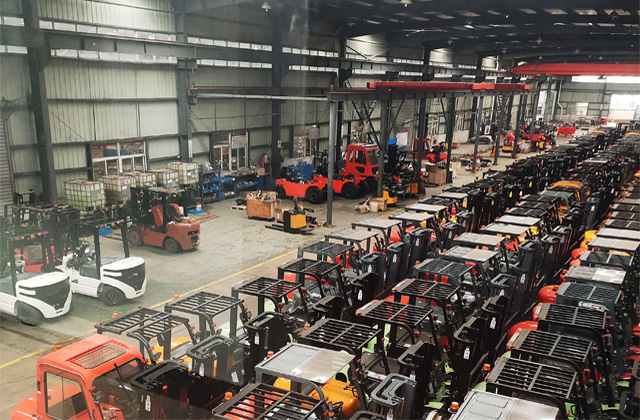
Shuangchao Machinery specializes in the R&D and manufacturing of forklifts and logistics equipment, boasting a comprehensive production system and rigorous quality control processes. Its product portfolio spans various categories—including electric forklifts, internal combustion forklifts, and warehousing equipment—enabling it to meet the diverse needs of different clients.
Advantages in Export Services
Extensive Global Market Experience: Products are exported to numerous countries and regions worldwide.
Strong Customization Capabilities: Capable of providing personalized designs tailored to specific client operating conditions.
Comprehensive Certifications: Compliant with and certified under various national standards.
Robust After-Sales System: Provides long-term technical support and spare parts services.
Service Philosophy
Shuangchao Machinery offers not merely equipment, but complete logistics solutions designed to help clients enhance operational efficiency and maximize value.
VI. How Can Enterprises Build an Efficient Forklift Export System?
In addition to selecting a high-quality service provider, enterprises must also establish a robust internal export system:
1. Build an Internationalized Team
This includes personnel dedicated to foreign trade, technical support, and after-sales service.
2. Conduct In-Depth Research on Target Markets
Gain a thorough understanding of local regulations, cultural nuances, and customer needs to avoid potential market incompatibility issues.
3. Strengthen Brand Building
Enhance brand influence through participation in trade exhibitions, online promotional campaigns, and the showcasing of successful case studies.
4. Implement Digital Management
Leverage ERP and CRM systems to boost efficiency in order management and customer service operations. VII. Future Outlook: From "Exporting Products" to "Exporting Standards"
In the future, forklift export services will evolve beyond the mere shipment of products to encompass the export of technology, standards, and comprehensive service systems. Chinese enterprises have the opportunity to establish a stronger voice and greater influence within the global logistics equipment sector.
As the "Belt and Road Initiative" advances and demand in emerging markets continues to grow, the forklift export industry is poised to enter a new era of expansive development. Ultimately, those capable of continuously upgrading their services, technology, and brand presence will be the ones to stand out and prevail in the arena of international competition.