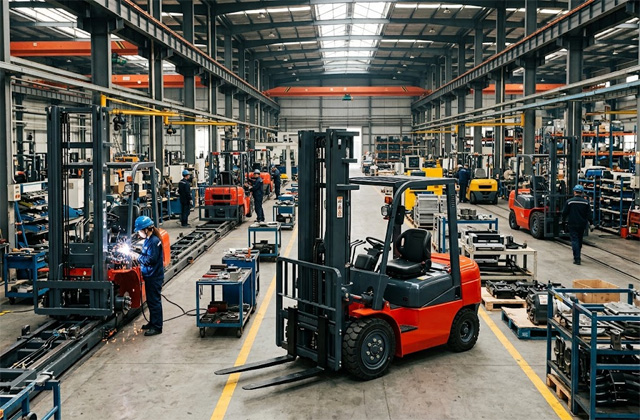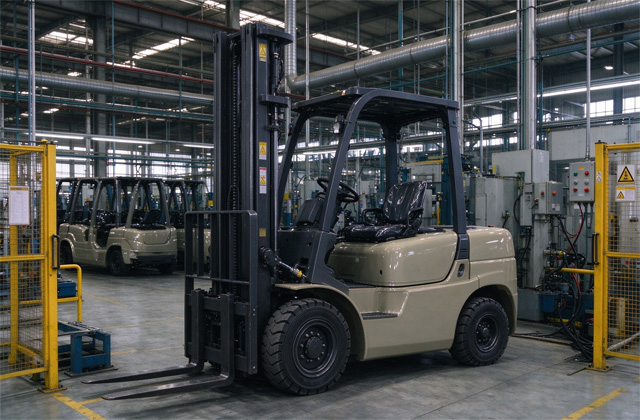
In a modern factory, forklifts do more than just move goods; they directly influence the efficiency of raw material distribution, production line integration, and the outbound shipment of finished products. Given that spatial layouts, cargo weights, and operational frequencies vary across different workshops, selecting the right forklift—and the right supplier—is essential to ensuring the equipment delivers real value.
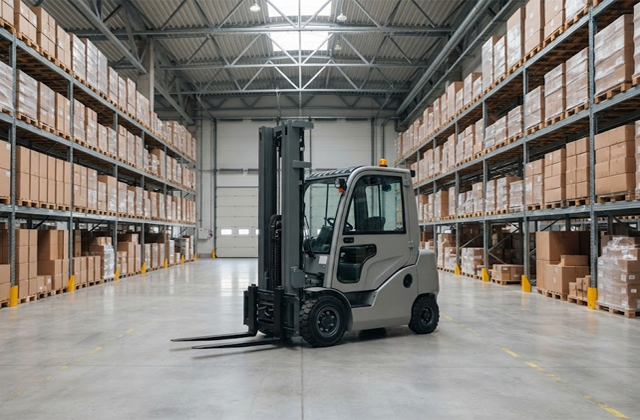
When faced with a wide array of forklift brands and models on the market, what factors should a company consider when making a choice?
I. Selecting a Forklift: Aligning with Actual Operational Conditions
A higher load capacity does not necessarily mean a better forklift; the key is finding one that fits the specific requirements of your site.
For tasks involving the transport of palletized goods or the loading and unloading of raw materials, a counterbalanced forklift—selected based on cargo weight and the operating environment—is often the right choice. If operations take place primarily indoors, where noise levels and emissions are a concern, electric forklifts are the ideal solution. For short-distance transport or stacking on racks, equipment such as electric pallet jacks or stackers should be considered.
When selecting a model, it is crucial to verify the rated load capacity, lifting height, turning radius, aisle width, and floor conditions. This is especially important for high-level stacking operations: you must confirm the actual load capacity at the specific lifting height required, rather than relying solely on the vehicle’s maximum rated capacity.
II. Evaluating a Forklift Manufacturer’s Overall Capabilities
When choosing a supplier for factory forklifts, do not base your decision solely on price. Consider product quality, technical suitability, and after-sales support.
First, assess the range of models and configurations the manufacturer offers, and determine whether they can provide sound recommendations tailored to your specific handling requirements.
Second, examine the vehicle’s power system, hydraulic system, braking performance, and safety features, and verify the relevant technical specifications.
Finally, look into their policies regarding routine maintenance, spare parts availability, repair response times, and warranties. For factories with continuous production schedules and high equipment usage, prompt maintenance services are vital to minimizing downtime.
III. Shuangchao Machinery: Focusing on the Real-World Needs of Factory Material Handling
The ultimate goal of purchasing a forklift is to solve material handling challenges, not simply to increase the number of machines on the floor.
Shuangchao Machinery is a resource worth considering when researching forklifts and material handling equipment. For factories with procurement needs, it is advisable to first compile details regarding cargo specifications, transport distances, operational frequency, and on-site dimensions. These should then be evaluated alongside specific product parameters, supply terms, and after-sales service offerings.
Clearly defining requirements before selecting equipment helps minimize errors in model selection, ensuring that the procurement plan is well-aligned with actual production scenarios.
IV. Enhancing Handling Efficiency: Safety Management Is Equally Crucial
Once forklifts are put into service, a standardized management system must be established. Enterprises should strategically plan traffic routes—separating pedestrian walkways from vehicle paths—and conduct regular inspections of critical components such as braking, steering, forks, and hydraulic systems.
Furthermore, operators must undergo appropriate training and adhere to all operational guidelines, strictly avoiding overloading, improper turns, or operating equipment that is in a state of disrepair.
Choosing the right forklift manufacturer is a vital step toward improving factory logistics efficiency. From matching the correct vehicle model to equipment maintenance and daily safety management, the seamless integration of all these elements ensures that forklifts effectively support production, enabling stable and highly efficient logistics operations within the facility.