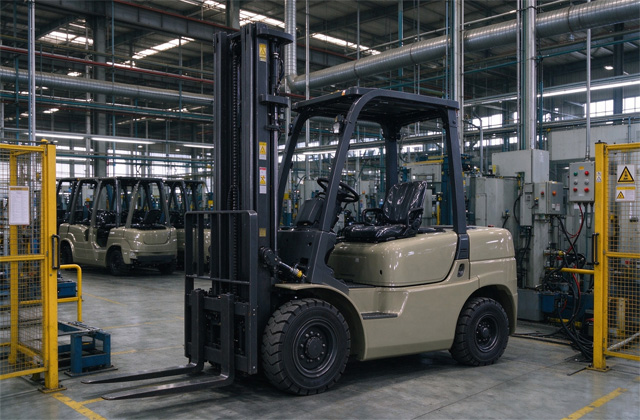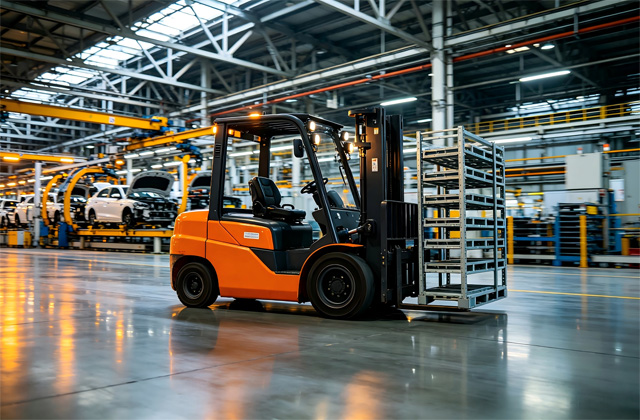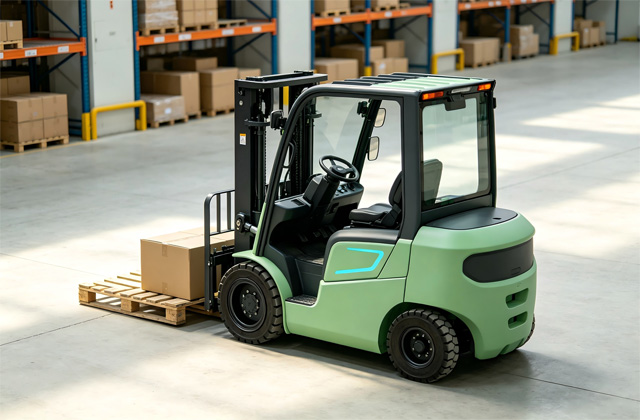
Driven by the intelligent upgrading of manufacturing, the automation of warehousing and logistics, and the maturing of new energy technologies, forklifts have evolved beyond mere material-handling tools. They have become vital production assets that enable modern enterprises to boost operational efficiency and reduce logistics costs. From massive smart factories to cold-chain logistics centers, and from the new energy sector to precision electronics manufacturing, high-end forklifts are transforming internal logistics operations by being smarter, safer, more eco-friendly, and more efficient.
The Definition of a High-End Forklift Manufacturer Has Evolved
In the past, a forklift manufacturer’s quality was often judged simply by whether their products could move loads, their price point, and their failure rates. By 2026, however, industry evaluation standards have shifted significantly.
A true high-end forklift manufacturer does more than just produce high-quality equipment; it provides comprehensive logistics and material-handling solutions tailored to the specific needs of different industries.
Examples include:
Intelligent warehouse forklift systems
AGV (Automated Guided Vehicle) solutions
New energy lithium-ion forklifts
Narrow-aisle storage equipment
Cold-storage-specific forklifts
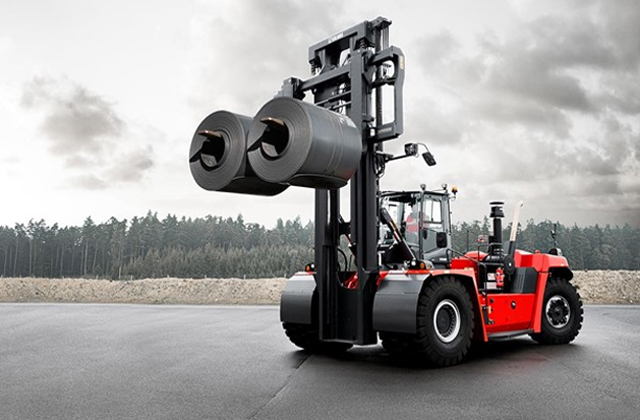
Heavy-duty handling forklifts
Autonomous logistics equipment
Digital fleet management systems
In essence, high-end manufacturers sell more than just hardware; they help enterprises build logistics systems that are more efficient, safe, and intelligent.
Why Are More Enterprises Choosing High-End Forklifts?
When purchasing equipment, many enterprises tend to focus solely on the initial acquisition cost while overlooking the total cost of ownership (TCO) over the equipment's lifecycle.
In reality, the combined costs associated with a high-quality forklift over five to ten years—including maintenance, energy consumption, and downtime for repairs—often far exceed the initial purchase price.
High-end forklifts typically offer the following advantages:
Higher Operational Efficiency
Advanced hydraulic systems, intelligent control systems, and precise power matching enable faster handling speeds and smoother lifting, thereby reducing the time required for each operation.
For large warehouses, saving even a few dozen seconds per task can add up to a significant boost in overall logistics efficiency over the course of a month.
Lower Energy Consumption
Leading manufacturers now commonly employ:
Permanent magnet synchronous motors
High-efficiency drive controllers
Intelligent energy recovery systems
High-capacity lithium batteries
Compared to traditional equipment, overall energy consumption is significantly reduced, saving enterprises substantial operational costs.
Longer Service Life
High-end forklifts are designed with the vehicle's total lifespan as a key consideration from the very beginning. For example:
High-strength steel chassis
Automated welding production lines
Laser cutting
CNC machining centers
Anti-corrosion coating processes
These manufacturing processes ensure the vehicle's long-term, stable operation, maintaining high performance even under continuous, heavy-duty use.
What capabilities define an excellent high-end forklift manufacturer?
A truly competitive manufacturer needs more than just factory facilities; the ability to innovate continuously is paramount.
I. R&D Capabilities
The R&D team determines the company's future direction.
Top-tier manufacturers typically possess:
Vehicle R&D centers
Electronic control R&D laboratories
Hydraulic testing platforms
New energy laboratories
Autonomous driving R&D teams
...and consistently launch new products that meet market demands.
II. Intelligent Manufacturing Capabilities
Forklift manufacturing has entered the digital era.
Production processes extensively utilize:
Laser welding robots
Automated painting systems
CNC bending equipment
Automated assembly lines
In-line inspection systems
Every process step undergoes rigorous data monitoring.
This ensures consistent quality across every forklift produced.
III. Quality Management Systems
High-end manufacturers place great emphasis on quality management.
From raw material procurement and component inspection to final vehicle release, products undergo hundreds of tests.
These include:
Braking performance
Lifting capacity
Mast stability
Steering precision
Electrical systems
Waterproofing
Safety features
Delivery to the customer occurs only after all standards are met.
How do requirements for high-end forklifts vary across industries?
Modern logistics environments are complex, and needs differ vastly between industries.
Manufacturing
Manufacturing plants prioritize:
All-weather operational capability
High reliability
Precision handling
Integration with MES (Manufacturing Execution Systems)
Forklifts handle not only transport but also play a role in the overall production rhythm.
E-commerce Warehousing
Large-scale warehouses prioritize:
High-level storage
Rapid picking
Narrow-aisle operation
Intelligent scheduling
High-end warehouse forklifts significantly improve warehouse space utilization.
Cold Chain Logistics
Low-temperature environments place extreme demands on equipment.
Manufacturers must provide:
Condensation-resistant designs
Low-temperature resistant hydraulic systems
Anti-slip tires
Specialized lubrication solutions
...to ensure stable, long-term equipment operation.
New Energy Industry
Products in the new energy battery, photovoltaic, and energy storage sectors are high-value. Consequently, there is an increased focus on:
Precision control
Collision avoidance systems
Stable lifting
High safety standards
Preventing product damage during transport.
Intelligence is redefining high-end forklifts
In the future, a forklift will be more than just a vehicle; it will be an intelligent terminal.
Leading manufacturers are already implementing:
AI-powered driving assistance
Systems capable of recognizing:
Pedestrians
Obstacles
Racking
Turning zones
Proactively alerting the operator or even automatically slowing down.
IoT platforms
Allowing management to monitor the following in real-time:
Online status
Battery levels
Operating hours
Travel paths
Maintenance reminders
Fault alerts
Enabling digital management.
Big data analysis
By collecting long-term operational data, it is possible to analyze:
Work efficiency
Energy consumption
Failure patterns
Usage frequency
Helping enterprises continuously optimize their logistics processes.
How do you determine if a high-end forklift manufacturer is a worthy partner?
Procurement decisions should not rely solely on promotional materials.
It is recommended to focus on the following aspects:
First, R&D capabilities.
Second, production equipment.
Third, customer case studies.
Fourth, after-sales service networks.
Fifth, product certifications.
Sixth, capacity for continuous innovation.
Truly excellent manufacturers often offer customized development based on customer needs, rather than simply selling standard products.
Shuangchao Machinery: Dedicated to high-quality forklift manufacturing and driving logistics upgrades for enterprises
Among the many forklift manufacturers, Shuangchao Machinery consistently upholds a development philosophy rooted in quality and driven by innovation, focusing on the R&D and manufacturing of high-quality logistics handling equipment. The company continuously introduces advanced production equipment and intelligent manufacturing processes, constantly optimizing and upgrading its product lines—including electric forklifts, lithium-ion forklifts, warehouse forklifts, and material handling equipment. It is committed to providing efficient, stable, and safe handling solutions for industries such as manufacturing, warehousing and logistics, cold chain transport, machining, and new energy.
Shuangchao Machinery pays close attention to product details, establishing comprehensive standards across the board—from vehicle structural design, powertrain matching, and hydraulic control to safety systems and after-sales support. By prioritizing both quality and service, the company provides reliable logistics equipment support, helping enterprises improve handling efficiency, reduce operating costs, and achieve modern logistics upgrades.
Future Development Trends for High-End Forklifts
In the coming years, the high-end forklift industry will evolve in the following directions:
First, the adoption of new energy sources will become widespread. As lithium-ion battery technology matures, eco-friendly, high-efficiency, and energy-saving solutions will dominate the market.
Second, the level of intelligence will continue to rise. Technologies such as AI-based vision systems, autonomous driving, path planning, and remote dispatching will be increasingly integrated into forklifts, enabling smarter and safer logistics operations.
Third, digital management will become standard practice for enterprises. Through cloud platforms, the Internet of Things (IoT), and data analytics, companies can monitor equipment status in real-time, implement predictive maintenance, and reduce the risk of downtime.
Furthermore, modular design will emerge as a key trend. Manufacturers will be able to rapidly configure products by combining different modules based on specific industry requirements, thereby enhancing product adaptability and shortening delivery times.
Finally, the demand for customized services will continue to grow. Since material handling requirements vary significantly across industries, high-end manufacturers must gain a deep understanding of their clients' production processes and offer specialized industry solutions rather than simply selling individual products.