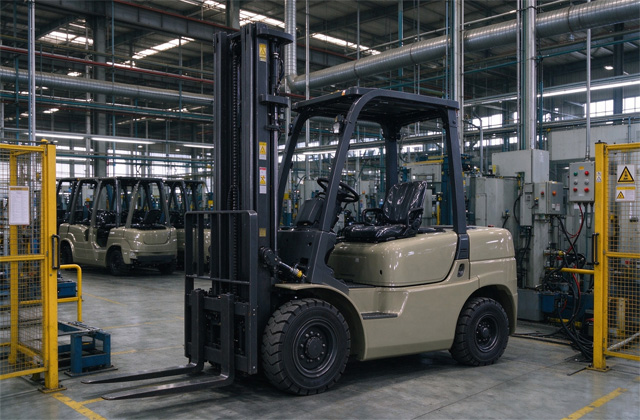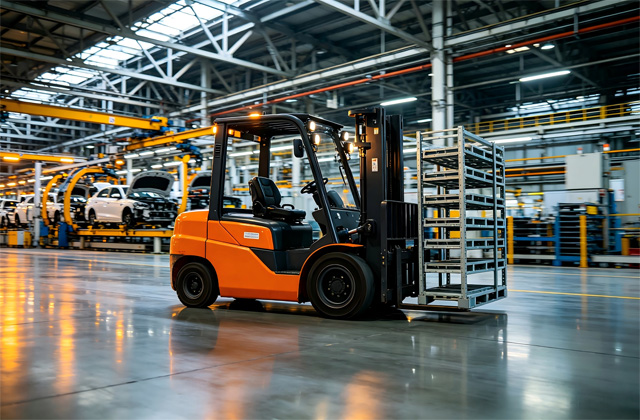
In sectors ranging from warehousing and logistics to manufacturing workshops, retail distribution, and the new energy industry, forklifts have evolved far beyond mere "cargo-moving tools." As enterprises increasingly prioritize operational efficiency, noise control, energy costs, and green production, electric forklifts are becoming a preferred choice for equipment upgrades. Consequently, the market has seen a proliferation of electric forklift manufacturers, each offering varying product specifications, manufacturing processes, battery ranges, and after-sales support systems. Faced with a vast array of brands and models, what truly matters to enterprises is not the sheer number of specifications listed in promotional materials, but rather the manufacturer's ability to provide a stable, well-matched, and durable solution tailored to actual operating conditions.
I. Why are electric forklifts becoming increasingly popular?
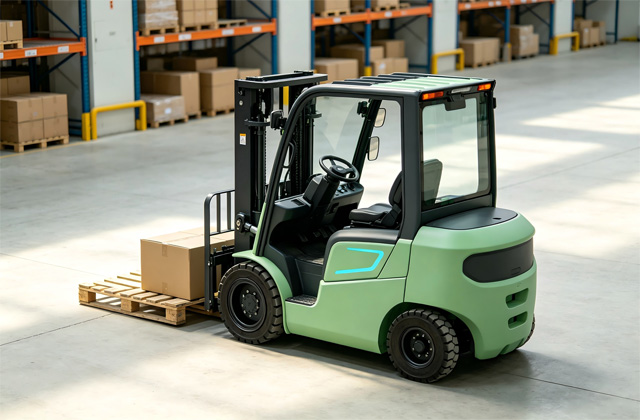
While traditional internal combustion forklifts remain valuable for heavy-duty tasks and complex outdoor environments, electric forklifts offer distinct advantages in settings such as indoor warehousing, food processing, electronics, pharmaceuticals, and precision manufacturing.
First, there is the shift in energy usage. Electric forklifts rely primarily on batteries for power; unlike traditional fuel-powered equipment, they do not emit exhaust fumes during daily operation, making them ideal for work areas that require high standards of environmental cleanliness.
Second is noise control. Warehouses and factory workshops often require continuous, long-term operation. Excessive equipment noise not only degrades the working environment but can also interfere with personnel communication. Electric drive systems enable quieter equipment operation.
Additionally, electric forklifts offer unique characteristics regarding handling, maintenance, and energy management. For enterprises with fixed operating routes and a high proportion of indoor usage, selecting the right electric forklift presents an opportunity to further optimize overall logistics efficiency.
II. Choosing an electric forklift manufacturer: Look beyond the price tag
Many enterprises fall into a common trap when purchasing forklifts: comparing price quotes before selecting a manufacturer.
In reality, electric forklifts are industrial assets designed for long-term use. A single unit may undergo years of high-frequency loading and handling operations. Prioritizing a low initial price while overlooking factors such as vehicle structure, electrical systems, key components, and after-sales support can actually lead to higher total costs over the equipment's lifecycle.
Therefore, evaluating whether an electric forklift manufacturer is a worthy partner involves considering several key dimensions.
First, assess the completeness of their product portfolio.
Professional manufacturers typically do not offer just a single model; instead, they provide a range of products tailored to specific requirements regarding load capacity, lifting height, turning radius, and application environments. For instance, the vehicle type suitable for pallet handling differs significantly in structure and function from the forklift required for high-level racking operations.
Second, consider core technology and manufacturing capabilities.
An electric forklift is not simply a matter of replacing an internal combustion engine with an electric motor. The motor, electronic control system, battery, hydraulic system, chassis, and vehicle control unit must be well-integrated. Truly mature manufacturers prioritize system synergy rather than emphasizing a single parameter in isolation.
Third, consider the ability to match the equipment to actual operating conditions.
Even for a "3-ton electric forklift," the required configuration varies depending on the environment—such as smooth indoor floors, outdoor concrete surfaces, or frequent ramp operations. A manufacturer's ability to select the right model based on the customer's specific site conditions is a key indicator of their professionalism.
III. How do you interpret key electric forklift parameters?
When faced with product specifications from manufacturers, procurement staff can easily get overwhelmed by the sheer volume of technical data. However, focusing on a few key indicators allows you to establish a basic framework for evaluation.
1. Rated Load Capacity
Rated load capacity determines the maximum weight a forklift can safely handle. It is important to note, however, that the rated capacity does not necessarily apply at all lifting heights.
Actual load-bearing capacity can change as the fork lifting height and load center distance vary. Therefore, when purchasing, one should not simply ask, "Can it lift 3 tons?" but rather make a comprehensive assessment based on the actual weight and dimensions of the goods and the required lifting height.
2. Lifting Height
If a company utilizes high-level racking, lifting height is a critical parameter. Warehouse ceiling height, rack height, and aisle dimensions should all be measured prior to purchase.
Blindly opting for equipment with a very high lifting height is not necessarily cost-effective. Taller, larger equipment often imposes stricter requirements regarding space, stability, and operator skill.
3. Battery Capacity and Runtime
An electric forklift's runtime depends on factors such as battery capacity, operating intensity, load weight, road conditions, and driving habits.
Consequently, there is no single answer to "how long it runs on a single charge" that applies to every company. A more practical approach is to calculate requirements based on daily operating hours, shift schedules, charging times, and the number of backup units available. 4. Turning Radius
For warehousing enterprises, aisle space is often more precious than one might imagine. A well-optimized turning radius makes it easier for a forklift to maneuver, pick up loads, and stack goods within limited space.
This is why, when purchasing, one should not focus solely on load capacity while overlooking vehicle dimensions and maneuverability.
IV. The True Competitiveness of Electric Forklift Manufacturers Lies in the Details
Top-tier electric forklift manufacturers do not simply prove themselves with claims of "good quality"; instead, their excellence is reflected in every stage of production, testing, assembly, and service.
For instance, the structural design of the chassis determines the equipment's long-term load-bearing capacity; the manufacturing precision of the mast affects stability during lifting and lowering; the electronic control system governs acceleration, braking, and operational control; and the hydraulic system directly determines the smoothness of lifting and lowering actions.
Furthermore, since industrial vehicles are subjected to high-frequency, repetitive tasks daily, product reliability is far more important than impressive-looking specifications on paper.
Therefore, when selecting a manufacturer, you should proactively inquire about suitable operating conditions, key specifications, maintenance intervals, the availability of wear parts, and troubleshooting protocols. A truly professional manufacturer will typically provide clear, detailed answers to these questions.
V. How Should Different Enterprises Choose an Electric Forklift?
No single electric forklift model is suitable for every scenario. Before making a purchase, enterprises should clearly define their specific operational requirements.
Warehousing and logistics companies prioritize aisle width, stacking height, continuous runtime, and operational efficiency; they should focus on vehicle maneuverability and battery endurance.
Manufacturing plants often require frequent short-distance transport alongside production lines, making vehicle dimensions, ease of control, and safety paramount.
Industries such as food and pharmaceuticals have strict requirements for the operating environment; factors like equipment cleanliness, noise levels, and maintenance procedures deserve special attention.
Enterprises operating outdoors must make choices based on road conditions, gradients, loads, and weather; they cannot simply purchase equipment based on standards used for indoor electric forklifts.
Ultimately, a truly sound purchasing strategy prioritizes the specific application scenario first, followed by technical specifications, rather than simply seeking the lowest price based on a fixed budget figure.
VI. Shuangchao Machinery: Selecting the Right Electric Forklift Based on Practical Needs
For enterprises seeking electric forklift manufacturers, equipment, or logistics handling solutions, it is important to look beyond the product itself and consider the manufacturer's manufacturing and service capabilities.
Shuangchao Machinery has long focused on the forklift and industrial handling equipment sector, accumulating extensive experience in product selection, equipment application, and customer service. To meet the diverse needs of different enterprises, Shuangchao Machinery prioritizes the actual operating environment. By factoring in load requirements, usage frequency, workspace constraints, and handling routes, they match the right equipment to the task, helping clients avoid the risks associated with purchasing the wrong model or unsuitable specifications. Enterprises interested in electric forklifts, configurations, and application solutions are encouraged to discuss their specific operational conditions with Shuangchao Machinery, shifting the focus of procurement from mere price comparisons to a comprehensive evaluation of product and service value.
VII. After-Sales Service: A Key Factor in Electric Forklift Procurement Costs
The biggest concern with industrial equipment is not its use, but the lack of support when problems arise.
During long-term operation, components such as batteries, electronic control systems, tires, and hydraulic parts inevitably experience varying degrees of wear and tear. Therefore, when purchasing, it is crucial to verify whether the manufacturer provides services such as installation and commissioning, operator training, maintenance support, and spare parts supply.
This is particularly critical for logistics and warehousing enterprises; prolonged downtime of core equipment can disrupt not just a single forklift, but the operational rhythm of the entire warehouse.
Consequently, when evaluating electric forklift manufacturers, factors such as after-sales response speed, spare parts availability, and technical support capabilities should be included in the procurement criteria. While the equipment price is a one-time expense, long-term value is determined by operational efficiency and maintenance costs.
VIII. The Future of Electric Forklifts: Getting Smarter
Driven by the development of intelligent manufacturing and smart logistics, electric forklifts are evolving from simple material handling tools into intelligent logistics terminals.
Future forklifts will likely integrate advanced features such as data collection, fleet management, intelligent scheduling, and fault early-warning systems, enabling enterprises to monitor equipment status and usage efficiency in real-time.
For large-scale warehousing centers, managing a large fleet of forklifts based solely on human experience is becoming increasingly difficult. Digital systems that track usage frequency, operating hours, and maintenance history allow managers to schedule equipment maintenance and upgrades more scientifically. This implies that the criteria enterprises use to select electric forklift manufacturers will gradually shift: the focus will move from "how much does this truck cost" to "what value can this equipment bring to the entire logistics system."
While purchasing electric forklifts may appear to be a simple equipment acquisition, it actually encompasses various factors such as operational efficiency, personnel safety, energy consumption, and long-term maintenance. A manufacturer worthy of a long-term partnership should do more than just supply products; they should also understand the client's specific operational conditions and help identify the equipment solutions that best meet their needs.