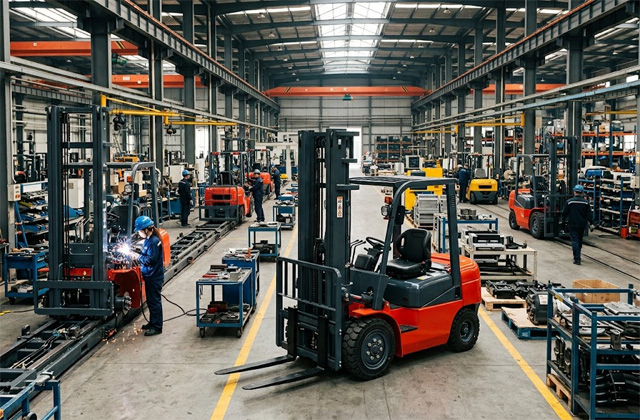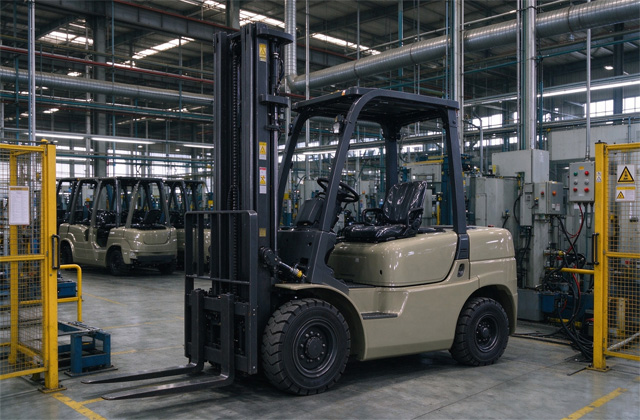
A forklift's true quality isn't determined by how new it looks, nor by simply comparing engine specs, load capacity, and price. For warehousing, manufacturing plants, building material suppliers, and large-scale production bases, a forklift doesn't just face a spec sheet every day—it navigates real-world operational routes. Factors such as cargo weight, aisle width, pallet size, rack height, and daily operating hours are what ultimately determine whether a forklift can deliver consistent, long-term value.
Therefore, when enterprises look for custom forklift manufacturers, their mindset should shift from merely "buying a forklift" to "customizing material handling equipment tailored to their specific operational conditions."
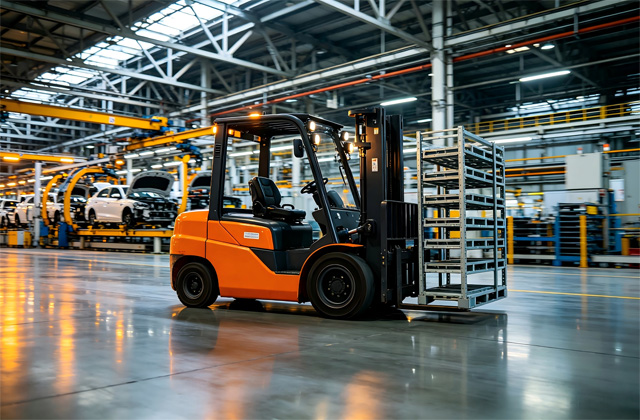
The first step in forklift customization isn't choosing a brand; it's analyzing the operating environment
Operational environments vary significantly across different enterprises.
A standard warehouse might prioritize turning radius and maneuverability; a manufacturing workshop needs to consider the interface between the forklift and the production line; while an outdoor building materials yard might place greater importance on ground clearance, load-bearing capacity, and the ability to navigate rough terrain.
Consequently, leading forklift manufacturers do not focus on a single parameter during product design; instead, they conduct a comprehensive analysis of the usage scenario.
For instance, if a company handles standard palletized goods daily, a standard configuration may suffice. However, if the cargo consists of special items like steel, stone, or heavy machinery, then factors such as fork length, mast height, attachment type, and overall vehicle stability may need to be re-engineered.
This is the true value of forklift customization: it is not customization for the sake of it, but rather ensuring that vehicle specifications align perfectly with actual workflows.
Higher load capacity isn't always better
Many procurement professionals fall into a common trap when selecting forklifts: the belief that a higher load capacity offers a safer margin.
In reality, a forklift's rated load is linked to factors such as actual lifting height and the load center. Even if a company routinely handles loads of around 3 tons, simply choosing a model with a higher tonnage rating is not necessarily the optimal solution.
Increasing the tonnage often changes the vehicle's curb weight, dimensions, turning space requirements, and energy consumption. If warehouse aisles are tight, an oversized vehicle can actually reduce operational efficiency. Professional forklift selection requires a focus on three key factors:
First, the actual weight of the load; second, the load's center of gravity; and third, the required lifting height.
Only by considering these factors together can one determine the truly appropriate load capacity specifications.
Mast height determines whether the load can actually be lifted to the required level.
If load capacity determines *how much* a forklift can carry, the mast and lifting system determine *how high* it can lift.
Warehousing enterprises, in particular, need to pay close attention to this aspect
Rack height, clear ceiling height, overhead obstructions, and the height of transport vehicles can all influence the choice of mast configuration. Selecting a model based solely on load weight while ignoring the actual lifting height can lead to situations where the forklift can handle the load's weight but cannot access the designated storage locations.
Therefore, when customizing a forklift, it is essential to measure the operational area beforehand, gathering data such as rack height, aisle width, doorway dimensions, and loading dock height.
Accurately measuring on-site dimensions is often more important than simply comparing specifications found in brochures.
Different attachments can transform a forklift into a completely different type of tool.
Forklifts are not limited to using standard forks
In specialized industries, configuring the forklift with specific attachments based on the nature of the goods can significantly boost operational efficiency. Items such as paper rolls, logs, drummed products, steel coils, and specialized mechanical components often require tailored handling methods.
This is a key area where leading forklift manufacturers distinguish themselves from ordinary suppliers.
A truly sophisticated customization solution involves more than just swapping out a single component; it requires careful consideration of factors such as attachment weight, shifts in the load center, hydraulic system compatibility, and overall vehicle stability.
In other words, the core of forklift customization is not merely "adding features," but integrating the vehicle, attachments, and cargo into a cohesive operational system.
Electric forklifts are reshaping the logic behind equipment selection
As enterprises place greater emphasis on green production, noise control, and indoor working environments, the application of electric forklifts is becoming increasingly widespread.
Electric forklifts are particularly well-suited for sectors such as food processing, pharmaceuticals, electronics manufacturing, and indoor warehousing, thanks to their relatively low operating noise and adaptability to various environments.
However, selecting an electric forklift requires looking beyond just battery capacity.
Considerations should include daily operating hours, whether the work is continuous, and the availability of charging areas. Can the enterprise accommodate battery-swapping operations? Such questions influence the final solution.
For enterprises with high-frequency operations, the method of energy replenishment can directly impact equipment utilization rates. Therefore, when proposing solutions, established forklift manufacturers must consider the vehicle, battery, charging infrastructure, and work shifts as an integrated system.
Why do leading forklift manufacturers place such importance on "configuration details"?
The forklift is a quintessential piece of industrial equipment; its value extends far beyond its initial purchase price.
What truly shapes an enterprise's long-term user experience are details such as operator visibility, handling comfort, braking performance, steering agility, ease of maintenance, and parts availability.
If a forklift operates eight hours a day but is awkward to handle, the cumulative effect is not only reduced efficiency but also increased operator fatigue.
Similarly, if the vehicle is difficult to maintain—turning routine servicing into a time-consuming ordeal—the costs associated with equipment downtime will steadily mount.
Thus, one can gauge the professionalism of a leading forklift manufacturer by looking beyond the product itself: Do they have a comprehensive approach to model selection? Do they understand the customer's specific operating conditions? Can they offer customized configurations? Is their after-sales support system robust? These factors often provide more valuable insight than a simple claim of "reliable quality."
Shuangchao Machinery: Designing Forklifts Based on Real-World Needs
Enterprises looking to purchase, upgrade, or customize forklifts should shift their focus from "which model is cheapest" to "which solution is best suited for long-term use."
Shuangchao Machinery specializes in forklift products and their application scenarios, providing corporate clients with both the equipment and material handling solutions. During the selection process, the company comprehensively matches equipment to the client's specific needs—considering factors such as cargo type, load requirements, operating environment, aisle dimensions, and usage frequency—to help them select the equipment best suited to their production and logistics workflows.
For enterprises with specialized handling requirements, a customization-oriented approach is particularly crucial. Rather than simply purchasing a forklift with impressive-looking specifications, it is far better to first clearly define on-site operational needs and then determine the appropriate vehicle specifications and configuration.
A Forklift’s Cost Goes Beyond the Purchase Price
When purchasing forklifts, enterprises should adopt the concept of "total lifecycle cost." The purchase price is just the beginning; subsequent factors include energy consumption, routine maintenance, replacement of wear parts, repair costs, operational efficiency, and indirect losses caused by equipment downtime.
For instance, a piece of equipment with a lower initial price but high energy consumption may incur significant long-term energy costs if operated intensively on a daily basis.
Conversely, a forklift that lacks "luxury" specifications but is perfectly matched to warehouse aisle widths, rack heights, and cargo types can reliably complete tasks every day, offering greater actual value.
Therefore, what enterprises should truly compare is not merely the "purchase price," but the total cost equation:
Procurement Cost + Operating Cost + Maintenance Cost + Efficiency Cost.
This is a more practical way to evaluate the cost-effectiveness of a forklift.
When selecting a forklift manufacturer, focus on these five points
If your enterprise is evaluating forklift manufacturers, consider the following dimensions:
1. Product Range
Does the lineup cover various tonnages, power sources, and operational scenarios?
2. Customization Capabilities
Can the manufacturer provide targeted solutions for specialized cargo, unique spaces, and specific operating conditions?
3. Transparency of Technical Specifications
Look beyond maximum load capacity; pay attention to key data such as load center, lift height, and overall vehicle dimensions.
4. After-Sales Service Capabilities
For industrial equipment subject to long-term operation, the speed of maintenance response and the availability of spare parts are crucial.
5. Practical Application Experience
A manufacturer's genuine understanding of operational needs in sectors like warehousing, logistics, and manufacturing is often more important than mere marketing slogans.
A great forklift is "engineered with purpose."
Purchasing a forklift is never a simple consumer transaction; it is an equipment decision directly linked to a company's logistics efficiency.
From load capacity to the mast, attachments to power systems, and aisle dimensions to work shifts—every seemingly minor detail can impact final performance.
Therefore, when looking for a manufacturer capable of customization, try shifting your perspective: instead of asking "Which forklift is the most expensive?", ask "What does my specific work site actually require?"
Manufacturers who can interpret operating conditions, understand specific needs, and translate product specifications into tangible operational efficiency are the ones most worthy of long-term partnership. For enterprises with specialized handling requirements or a need for customized forklifts, basing decisions on on-site data to select the right products and solutions is often more rational than blindly pursuing "high tonnage" and "high-end specifications."