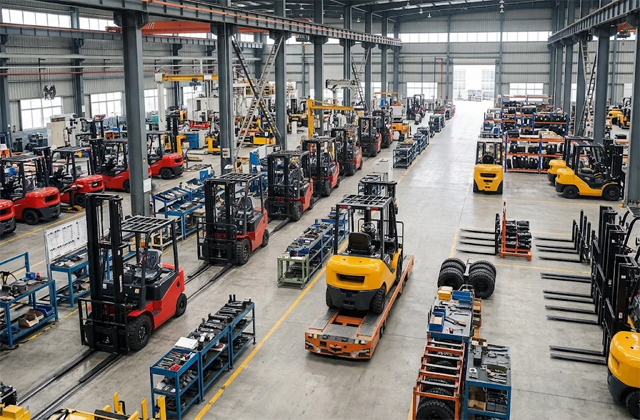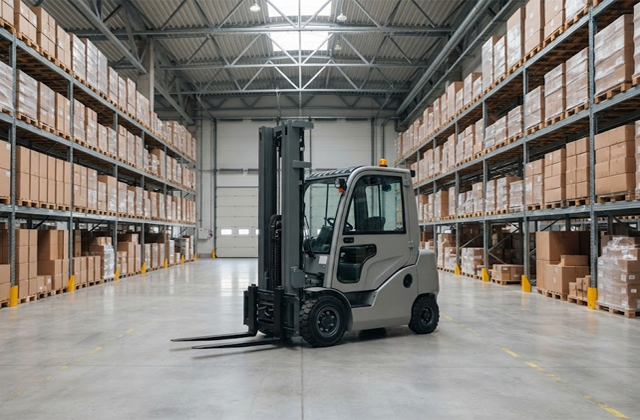
In warehousing, manufacturing facilities, and large-scale distribution centers, electric forklifts have evolved far beyond simple material-handling tools; they are now critical assets that directly influence operational efficiency, space utilization, and operating costs. Given the wide array of brands and configurations available on the market, what should you prioritize when making a purchase? And what core capabilities define a truly capable electric forklift manufacturer?
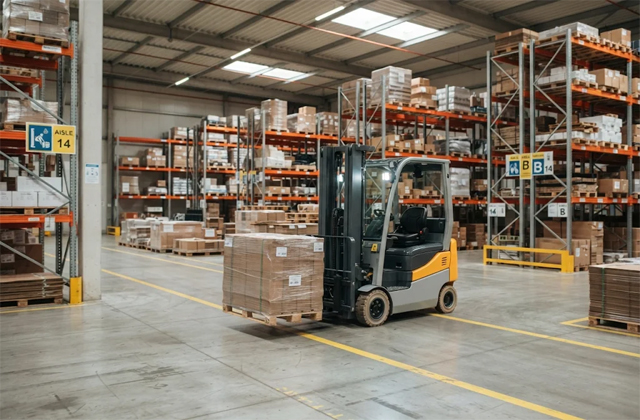
Evaluating a manufacturer’s strength requires looking beyond mere aesthetics or price. Instead, one must conduct a comprehensive assessment across several dimensions, including technical R&D, product performance, manufacturing processes, and after-sales support.
I. What Defines the Core Competitiveness of a Leading Forklift Manufacturer?
Top-tier forklift manufacturers typically possess a robust, end-to-end system for product R&D and manufacturing. Every stage—from the structural design of the vehicle and the integration of the powertrain to the rigorous testing of key components—must be thoroughly validated.
In the case of electric forklifts, the motor, electronic control system, and battery are the primary determinants of performance. The motor dictates power output efficiency; the electronic control system influences operational smoothness and responsiveness; and the battery determines runtime (range) and charging efficiency.
Furthermore, the chassis structure, steering system, braking performance, and mast stability are equally important. In environments characterized by high-frequency handling or heavy-load operations, the stability and durability of the equipment directly impact the long-term user experience.
II. Beyond Runtime: Considering the Operational Environment
Different business environments impose distinct requirements on forklifts.
Warehousing centers typically prioritize turning radius, lift height, and maneuverability within narrow aisles. Manufacturing facilities place greater emphasis on load capacity, operational stability, and the ability to sustain continuous, long-duration work. Cold-chain facilities, meanwhile, require equipment designed to withstand low-temperature environments, which can affect both battery performance and overall mechanical operation.
Therefore, when selecting an electric forklift, it is advisable to focus on the following specifications:
Rated Load Capacity: Choose an appropriate tonnage based on the weight of your typical cargo to avoid the risks associated with long-term overloading.
Lift Height: Determine the required mast configuration based on your racking height and warehouse layout.
Runtime/Range: Evaluate this by considering battery capacity, operational intensity, and available charging infrastructure.
Turning Radius: This dictates the unit’s maneuverability and flexibility when operating in narrow aisles or confined spaces. Safety Configuration: Pay attention to braking systems, visibility design, warning devices, and other relevant safety protection features.
Higher specifications are not necessarily better; a truly sensible configuration is one that aligns with a company’s actual operational requirements.
III. Lithium-Ion Technology Drives Forklift Upgrades
In recent years, the use of lithium-ion batteries in electric forklifts has grown steadily. Compared to traditional lead-acid batteries, lithium-ion solutions typically offer faster charging, lower maintenance requirements, and higher energy efficiency.
For companies operating multiple shifts, "opportunity charging" (charging during short breaks) can help increase equipment utilization. However, when considering lithium-ion forklifts, it is essential to evaluate the battery management system (BMS), thermal management design, charging safety, and the level of integration between the battery and the vehicle itself.
When selecting a manufacturer, look beyond simple battery capacity; investigate their battery supply chain, warranty policies, and long-term maintenance capabilities.
IV. Evaluate the Manufacturer’s Service System
Forklifts are long-term production assets, and the purchase is merely the beginning of the partnership. Post-delivery services—such as installation and commissioning, operator training, routine maintenance, troubleshooting, and spare parts supply—significantly impact the total cost of ownership.
A capable manufacturer should not only provide products that meet your requirements but also offer robust technical support. Before making a purchase, verify whether the manufacturer has a professional service team, maintains an inventory of common spare parts, and has a clear, responsive after-sales support mechanism.
V. Shuangchao Machinery: Aligning Forklift Products with Operational Needs
When selecting electric forklifts and material handling equipment, companies must consider a combination of equipment performance, the application environment, and long-term service. Shuangchao Machinery focuses on ensuring that its forklifts are well-matched to the specific operational scenarios of its clients, providing comprehensive material handling equipment and service support.
Companies looking to purchase equipment can consult with Shuangchao Machinery to determine the optimal configuration—factoring in variables such as load weight, transport distance, operational frequency, and site conditions—to ensure the chosen equipment aligns precisely with actual production needs.
Ultimately, the strength of an electric forklift manufacturer is reflected in its product technology, manufacturing quality, and service capabilities. Rather than focusing solely on the lowest price or the highest specifications, buyers should first clarify their specific operational requirements, then evaluate options based on core components, overall vehicle performance, and long-term ownership costs. Choosing the right equipment is essential for making warehousing, logistics, and production-related material handling more efficient and stable.