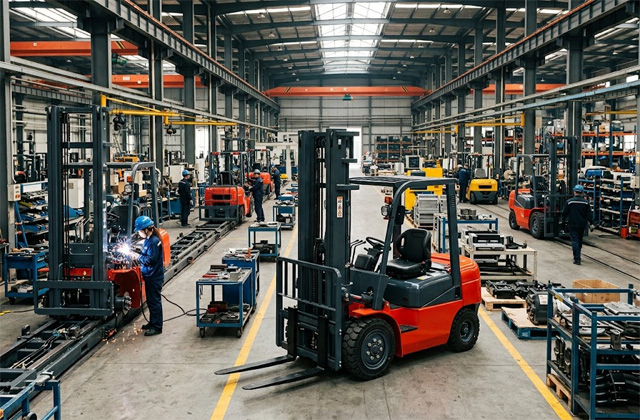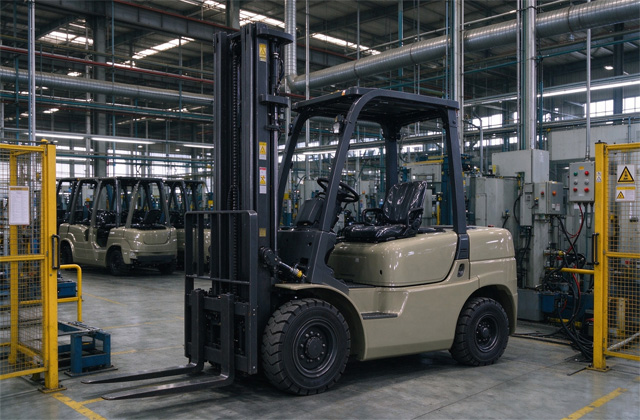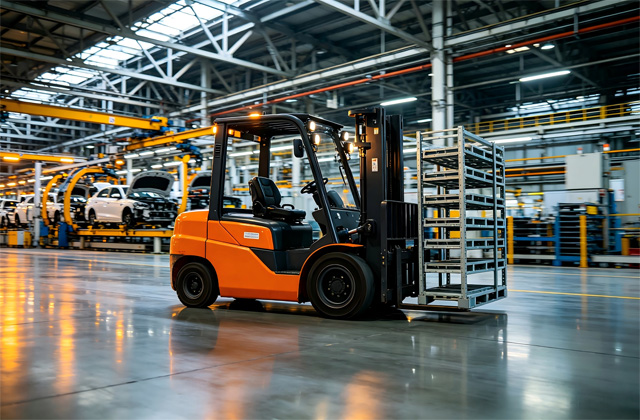
In the minds of many, a forklift is merely a piece of equipment working silently in a corner of a warehouse. However, upon delving deeply into fields such as industrial manufacturing, warehousing and logistics, cold chain transport, and port operations, one discovers that forklifts are no longer mere "lifting tools"; rather, they serve as a critical pillar supporting a company's operational efficiency. Particularly in today's era of continuously upgrading intelligent manufacturing, an exceptional forklift manufacturer does more than just supply equipment—it actively assists enterprises in restructuring logistics efficiency, reducing labor costs, and elevating safety management standards.
I. The Forklift Industry Is Undergoing a Quiet Transformation
In the past, the forklift market was dominated by traditional fuel-powered models, with a primary emphasis on power output and load-bearing capacity. Today, however—driven by evolving environmental philosophies and advancements in intelligent technologies—the forklift industry has entered an entirely new phase of competition.
Many modern manufacturing facilities are now placing higher demands on their forklifts:
Do they support new energy power sources?
Are they equipped with intelligent safety systems?
Can they operate effectively within narrow aisles?
Do they facilitate warehouse automation?
Do they possess the capability for long-term, stable operation?
Is there a comprehensive after-sales support system in place?
This signifies that the traditional concept of simply "selling forklifts" has gradually evolved into "providing logistics handling solutions."
Leading forklift manufacturers no longer compete solely on price; instead, they compete on technology, quality, and service.
II. Why Are More and More Enterprises Prioritizing the Choice of Forklift Manufacturers?
When procuring equipment, the factor that many enterprises most frequently overlook is, in fact, the "manufacturer's capability."
Two forklifts may appear identical—with seemingly similar technical specifications—but after six months of actual operation, the disparities between them become increasingly evident.
For instance:
1. Differences in Equipment Stability
To cut costs, some smaller manufacturers compromise on the quality of steel used as well as the configuration of electronic control and hydraulic systems. While the initial purchase price may appear low, long-term usage often leads to issues such as:
Oil leaks
Unstable lifting operations
Diminished battery life
Braking anomalies
Steering malfunctions
In contrast, reputable forklift manufacturers typically possess mature manufacturing frameworks and rigorous quality inspection protocols, resulting in equipment with a significantly longer service life.
2. Vast Disparities in After-Sales Response Speed
Forklifts are high-usage assets; consequently, any downtime directly impairs warehouse operational efficiency.
Truly reliable forklift manufacturers establish:
Local service teams
Comprehensive spare parts inventory systems
Rapid repair mechanisms
Regular preventive maintenance schedules
These measures serve to minimize the financial losses incurred by enterprises due to operational downtime.
3. Industry-Specific Adaptability Is Paramount
Different industrial sectors impose vastly different requirements on their forklifts. For example:
Key Industry Requirements
Cold Chain Warehousing: Low-temperature resistance and anti-condensation capabilities
Food Industry: Eco-friendliness and low noise levels
Port Logistics: High-intensity, continuous operation
E-commerce Warehousing: Agile maneuverability in narrow aisles
Manufacturing Plants: Precision handling and operational stability
A truly professional forklift manufacturer is capable of providing customized solutions tailored to specific industry scenarios.
III. Modern Forklifts: More Than Just "Tools for Moving Goods"
With the advancement of intelligent logistics, forklifts are evolving into "intelligent terminal devices."
Modern forklifts typically integrate:
Electronic control systems
Sensor technology
Autonomous navigation
AI-driven scheduling
Cloud-based data management
Safety warning systems
Many large enterprises have even begun deploying unmanned forklift systems.
This implies that future forklift manufacturers will require not only mechanical manufacturing capabilities but, more importantly, expertise in software and intelligent control technologies.
IV. Shuangchao Machinery: A Forklift Equipment Provider Focused on Quality and Efficiency
Among the multitude of forklift manufacturers, Shuangchao Machinery has steadily gained recognition from an increasing number of clients, thanks to its consistent product quality and comprehensive service system.
As an enterprise dedicated to the field of industrial handling equipment, Shuangchao Machinery focuses not merely on the equipment itself, but also on the long-term efficiency and cost-effectiveness for businesses during operation.
In its product R&D process, Shuangchao Machinery places particular emphasis on:
Operational stability
Safety performance
Energy efficiency
Service life
Ease of maintenance
Tailoring its approach to diverse business scenarios, Shuangchao Machinery offers a wide range of forklift equipment and handling solutions designed to help enterprises enhance their warehousing operational efficiency.
Particularly in sectors such as warehousing logistics, e-commerce distribution, and manufacturing handling, Shuangchao Machinery's equipment has secured long-term partnerships with numerous clients, distinguished by its exceptional durability and stable performance.
V. How to Identify a Truly Professional Forklift Manufacturer?
Many purchasing professionals, when first entering the forklift industry, can easily be swayed by promotional materials. However, the true mark of a professional manufacturer often lies in the details.
1. Do they possess a mature production system?
Manufacturers with genuine capabilities typically feature:
Standardized production workshops
Automated welding processes
Comprehensive vehicle inspection procedures
Robust quality control management systems
These elements are the determinants of equipment stability.
2. Do they possess technical R&D capabilities?
Competition in the modern forklift market is no longer simply a battle over price.
Core technologies include:
Motor systems
Hydraulic controls
Battery management
Intelligent operation controls
Safety protection systems
Manufacturers equipped with strong R&D capabilities are better positioned to continuously upgrade and improve their products. 3. Does the manufacturer possess a wealth of industry case studies?
Experienced manufacturers have a deeper understanding of customer needs.
For example:
How to reduce warehouse transit times
How to improve loading and unloading efficiency
How to optimize aisle space
How to reduce the physical labor intensity for workers
This kind of practical experience is far more important than simply selling equipment.
4. Is the after-sales service comprehensive?
Excellent manufacturers typically provide:
On-site installation
Technical training
Regular maintenance
Rapid repair services
Long-term spare parts support
The equipment itself is merely the beginning; the service provided represents the true long-term value.
VI. Why are electric forklifts becoming increasingly popular?
In the past, many enterprises preferred fuel-powered forklifts due to their superior power output. However, with the maturation of new energy technologies, electric forklifts are rapidly gaining prominence.
The primary reasons include:
1. Greater environmental friendliness
Electric forklifts produce zero exhaust emissions, making them ideally suited for environments such as:
Indoor warehouses
Food processing plants
The pharmaceutical industry
Supermarket and retail logistics centers
2. Lower operating costs
Compared to fuel-powered equipment:
Electricity costs are lower than fuel costs
Maintenance expenses are lower
Malfunction rates are lower
They offer greater cost savings over the long term.
3. Reduced noise levels
Many modern warehouses prioritize a comfortable working environment.
Electric forklifts operate more quietly, making them better suited for prolonged periods of operation.
4. Higher levels of intelligence
Currently, it is much easier to integrate various intelligent systems into electric forklifts, such as:
Automatic speed limiting
Intelligent diagnostics
Data monitoring
Autonomous driving capabilities
This offers greater potential for future development.
VII. Three Major Trends in the Future Forklift Industry
1. Intelligentization
In the future, forklifts will increasingly resemble "mobile robots."
For example:
Automatic path planning
Autonomous dispatching
Automatic obstacle avoidance
Networked data connectivity
The era of intelligent warehousing has arrived.
2. New Energy Adoption
Environmental protection requirements are continuously becoming more stringent.
Lithium-ion battery forklifts and hydrogen-powered forklifts are emerging as the new direction for the industry.
In the future, the proportion of traditional fuel-powered equipment is likely to continue its decline.
3. Scenario-Specific Customization
In the future, enterprises will no longer be satisfied with "generic, general-purpose forklifts."
Instead, they will require:
Specialized cold-chain forklifts
Narrow-aisle forklifts
High-lift warehousing forklifts
Heavy-duty forklifts
Autonomous material handling forklifts
Manufacturers must gain a deeper understanding of specific industry requirements.
VIII. Why are more and more enterprises beginning to focus on long-term operating costs?
When procuring equipment, many enterprises tend to focus solely on the initial purchase price. However, the factors that truly impact a company's profits are, in reality:
Post-purchase maintenance
Losses due to downtime
Energy consumption costs
Service life
Operational efficiency
A forklift that is inexpensive upfront but prone to frequent breakdowns often results in higher long-term costs.
Consequently, an increasing number of enterprises are now prioritizing:
Overall cost-effectiveness
The manufacturer's service capabilities
Equipment stability
Ongoing maintenance costs
This is precisely why specialized forklift manufacturers are gaining increasing recognition and importance in the market.
IX. In the Era of Warehouse Upgrades, Forklift Manufacturers Are Playing an Increasingly Pivotal Role
The pace of modern logistics is accelerating rapidly.
This is particularly true for sectors such as:
E-commerce
Fresh food cold chains
Intelligent manufacturing
New retail warehousing
—all of which demand exceptionally high levels of logistics efficiency.
As many enterprises undergo warehouse upgrades, forklifts have emerged as critical nodes within their logistics networks.
An exceptional forklift manufacturer does not merely sell equipment; rather, it assists enterprises in establishing highly efficient logistics systems.
X. How Does Shuangchao Machinery Help Enterprises Enhance Handling Efficiency?
In serving its clients, Shuangchao Machinery places a strong emphasis on "practical application value."
We do not simply supply forklift equipment; we also provide customized configurations tailored to the specific operational scenarios of each enterprise.
For instance:
1. Optimizing warehouse aisle utilization
By matching the appropriate forklift models to the facility, we maximize the utilization of warehouse space.
2. Reducing physical labor intensity
Through the deployment of more stable and agile equipment, we alleviate the physical strain associated with repetitive handling tasks.
3. Boosting overall logistics efficiency
High-efficiency equipment helps shorten loading and unloading times, thereby accelerating inventory turnover rates.
4. Minimizing equipment-related downtime
Robust equipment quality effectively mitigates the risk of operational interruptions caused by mechanical failures.
For many enterprises, this level of operational stability is far more critical than mere low pricing.
XI. Common Pitfalls to Avoid When Purchasing Forklifts
1. Focusing solely on price
Low-priced equipment often implies:
Compromised material quality
Inferior components
A lack of after-sales support
—ultimately making it more expensive to operate in the long run.
2. Neglecting after-sales service
Many enterprises discover—only after making a purchase—that:
Spare parts are difficult to source
Repair wait times are excessively long
Technical support is unavailable
—factors that severely disrupt production operations.
3. Selecting the wrong forklift model
Different operational environments require different types of equipment.
For example:
High-bay racking systems require high-lift forklifts
Narrow aisles require forklifts with a small turning radius
Heavy-duty handling tasks require high-tonnage equipment
An incorrect selection will directly compromise operational efficiency.
4. Overlooking future expansion requirements
As an enterprise grows in scale, its existing equipment may eventually prove inadequate to meet its evolving future needs. Therefore, the following factors should be considered during the procurement process:
Warehouse Upgrades
Automation Retrofitting
Compatibility with Intelligent Systems
XII. What Will a Truly Competitive Forklift Manufacturer Look Like in the Future?
In the future, industry competition will increasingly center on the following key areas:
Technical Prowess
Possession of continuous R&D capabilities.
Intelligent Capabilities
The ability to provide intelligent logistics solutions.
Service Infrastructure
The capacity to provide long-term support to clients.
Industry Experience
A genuine understanding of specific customer scenarios.
Brand Reputation
Long-term market track record as the determinant of corporate credibility.