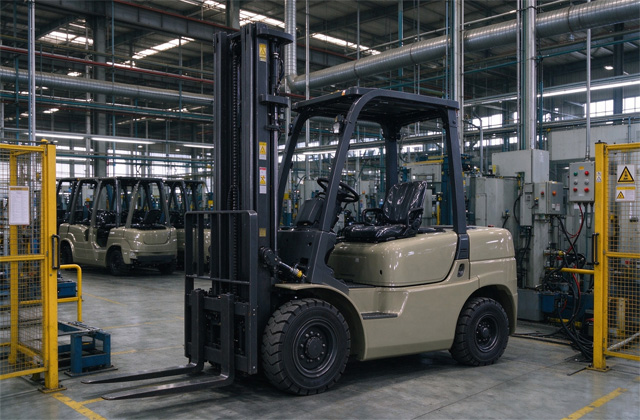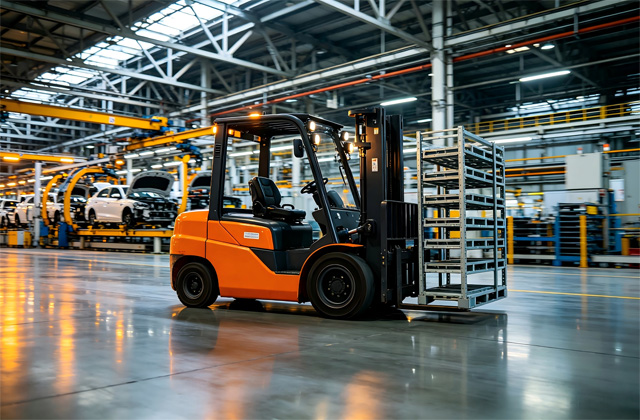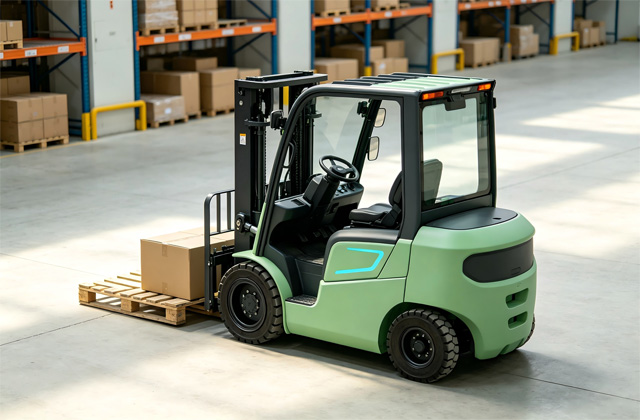
In sectors such as warehousing, manufacturing, logistics, and port operations, forklifts may appear to be merely equipment for moving goods; in reality, however, they link various stages of the workflow, including material feeding, transfer, palletizing, loading/unloading, and warehousing. The performance of a forklift affects not only the efficiency of individual handling tasks but also the operational rhythm of the entire warehousing system. Consequently, when enterprises set out to purchase forklifts, "leading manufacturers" are often the primary candidates for consideration.
However, determining whether a forklift manufacturer is a worthy partner requires looking beyond mere company size or simple price comparisons. What truly matters are factors such as the product portfolio, core technologies, manufacturing capabilities, quality control, after-sales support systems, and an understanding of actual operating conditions.
I. What defines a "leading forklift manufacturer"?
Being a "leader" in the industry does not simply mean having high brand recognition; rather, it implies possessing comprehensive capabilities that create a stable competitive advantage.
First is product coverage. Material handling needs vary significantly across enterprises: some warehouses focus primarily on pallet handling, some manufacturing plants require high-frequency loading and unloading, and some logistics parks prioritize long-duration, continuous operation. Therefore, mature forklift manufacturers typically do not offer just a single product; instead, they build a comprehensive product ecosystem that includes internal combustion forklifts, electric forklifts, warehouse trucks, stackers, and pallet trucks.
Second are R&D and manufacturing capabilities. Forklifts are quintessential industrial equipment; their vehicle structure, hydraulic systems, drive systems, mast designs, and control systems must work in perfect coordination. A manufacturer's capacity for continuous R&D directly impacts equipment reliability, the operator experience, and the potential for future upgrades.
Third is service capability. The transaction does not end when the forklift is purchased. Routine maintenance, the replacement of wear parts, troubleshooting, and technical support all influence the equipment's actual service life. Thus, a robust after-sales system is often more important to enterprises than a low initial price.
II. Bigger isn't always better: Matching the forklift to the operating conditions
When selecting a forklift for the first time, many procurement professionals fall into a common trap: assuming that higher tonnage and superior specifications automatically mean the equipment is "better."
In reality, selecting a forklift is more akin to solving a matching puzzle based on specific operating conditions. For instance, in a standard warehouse with narrow aisles, factors such as the vehicle's turning radius, dimensions, and mast height are critical—prioritizing these is far more important than simply chasing a higher load capacity. Conversely, for handling construction materials outdoors, one must consider ground conditions, gradeability, protective features, and the power system.
In industries like food processing, pharmaceuticals, and electronics manufacturing, requirements regarding cleanliness, noise levels, and emissions are often stricter; in these cases, electric forklifts frequently offer distinct advantages.
Therefore, when selecting a leading forklift manufacturer, it is best for a company to clearly outline its specific operational conditions: what is being moved, the weight and lifting height of the loads, the location, daily operating hours, and ground conditions. Providing this information is far more valuable than simply stating, "We need a forklift."
III. How to choose between internal combustion (IC) and electric forklifts?
This is a very common question during the forklift procurement process.
IC forklifts are characterized by direct power response, strong sustained operational capability, and adaptability to complex outdoor environments; they remain widely used in sectors such as manufacturing, construction materials, logistics, and port operations.
Electric forklifts offer advantages in terms of environmental friendliness, low noise levels, and suitability for indoor use. They are particularly well-suited for environments with strict standards, such as warehousing, supermarkets, electronics manufacturing, and the food industry.
As battery and electronic control technologies advance, the scope of application for electric forklifts continues to expand. When making a choice, companies should not simply ask, "Is electric better than diesel?" but should instead calculate the equipment's total cost of ownership under actual operating conditions.
Factors such as energy costs, maintenance expenses, labor efficiency, the convenience of charging or battery swapping, and the equipment's service life should all be factored into the purchasing decision.
IV. Don't focus solely on "load capacity" when considering key forklift specifications
Terms like "3-ton forklift" or "5-ton forklift" are commonly used during procurement, but rated load capacity is not the only indicator of a forklift's performance.
For example, two forklifts with the same nominal 3-ton rating may differ in actual operational capability depending on load center distance, lifting height, and mast configuration.
Therefore, it is recommended to focus on the following parameters during procurement:
1. Rated lifting capacity
This determines the maximum weight of the load the forklift can safely handle and serves as a fundamental specification. 2. Load Center Distance
The position of the load's center of gravity relative to the front face of the forks directly affects the vehicle's actual load-bearing capacity.
3. Maximum Lifting Height
If an enterprise utilizes high-level racking, the mast configuration must be selected based on the height of the rack levels.
4. Minimum Turning Radius
This is particularly important in high-density storage environments; a well-optimized turning radius makes it easier to maneuver and operate within limited spaces.
5. Mast Type
Different structures—such as two-stage or three-stage masts—are suited to varying lifting heights and operational requirements.
6. Overall Vehicle Stability
Stability during lifting and transport is directly linked to operational safety and serves as a key indicator of the equipment's manufacturing quality.
V. What Truly Matters: "Total Lifecycle Cost"
When purchasing a forklift, focusing solely on the initial price can lead to a narrow decision-making perspective.
Suppose the purchase prices of two forklifts are similar, but one offers lower daily energy consumption, a lower failure rate, and easier maintenance; after three to five years of continuous use, the difference in total cost can be substantial.
Therefore, enterprises should adopt a more comprehensive approach:
Purchase Cost + Energy Cost + Maintenance Cost + Parts Cost + Labor Efficiency + Downtime Losses = Total Cost of Ownership.
This is why mature enterprises place such high importance on product stability and service networks when selecting a forklift manufacturer.
The true value a forklift creates lies not merely in "lifting goods," but in minimizing wait times, downtime, and rework within warehousing and production processes.
VI. Why Is After-Sales Service a Key Indicator of a Manufacturer's Strength?
Forklifts are high-usage equipment; normal wear and tear during long-term operation is inevitable.
Consequently, the presence of a professional after-sales service team is crucial.
A comprehensive service system typically encompasses equipment commissioning, operator training, regular maintenance, troubleshooting, spare parts supply, and technical consultation.
For large manufacturing and logistics enterprises in particular, equipment downtime can disrupt not just a single material-handling station, but the entire production or warehousing chain.
Therefore, when evaluating forklift manufacturers, consider asking the following questions:
What is the after-sales response mechanism?
Is the supply of common spare parts stable?
Is operator training provided?
Are regular inspection services offered? How are equipment malfunctions handled?
Is ongoing maintenance and upgrading supported?
These may seem like minor details, but they often determine the actual experience after purchase.
VII. Shuangchao Machinery: Forklift solutions based on actual operating conditions
Among the many service providers in the forklift industry, Shuangchao Machinery consistently focuses on the practical needs of industrial material handling. Rather than focusing solely on product specifications, companies should make purchasing decisions based on a comprehensive assessment of usage scenarios, handling efficiency, equipment suitability, and long-term maintenance requirements.
Shuangchao Machinery offers forklift products and solutions tailored to the specific handling needs of different enterprises, helping clients make choices based on load capacity, operating environments, usage frequency, and site conditions. For applications such as manufacturing workshops, warehousing and logistics, and cargo loading/unloading, this condition-based selection approach helps avoid the common pitfall of purchasing equipment only to discover it is unsuitable for the job.
For companies looking to purchase or upgrade their material handling equipment, thoroughly communicating actual operating conditions with the manufacturer or a professional supplier—and then determining the appropriate model—is generally a more reliable strategy than simply comparing price quotes.
VIII. Five key factors for identifying top-tier forklift manufacturers
If a company is currently in the process of purchasing forklifts, the evaluation process can be summarized into five key dimensions:
First, look at the products.
Do the products cover the company's current and potential future application scenarios?
Second, look at the technology.
Focus on core components—such as the powertrain, hydraulic system, electronic control system, and mast structure—rather than just the exterior appearance.
Third, look at manufacturing capabilities.
Stable production processes and quality control capabilities are the foundation for long-term equipment reliability.
Fourth, look at case studies.
Real-world application cases within the same industry or under similar operating conditions often provide more valuable insights than promotional materials.
Fifth, look at service.
After-sales responsiveness, spare parts availability, and maintenance capabilities directly determine the long-term user experience.
IX. Future forklifts will become increasingly "smart"
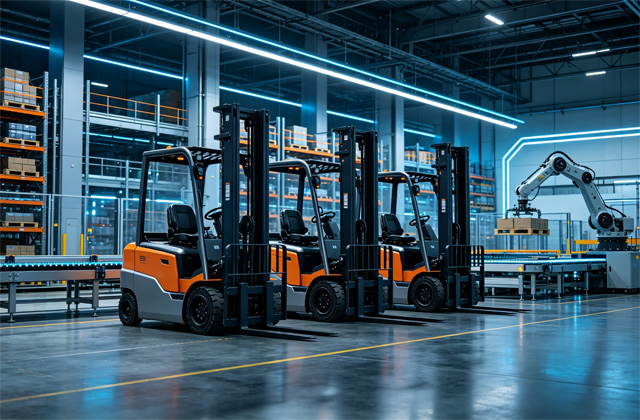
With the continuous development of intelligent warehousing and industrial digitalization, forklifts are evolving from traditional material handling tools into intelligent logistics equipment.
Future forklifts may not only perform handling tasks but also integrate seamlessly with warehouse management systems, intelligent scheduling systems, and automated equipment. The development of technologies such as unmanned forklifts, AGVs, and intelligent warehousing systems has opened up new avenues of application for the forklift industry.
For enterprises, this means that future forklift procurement decisions will likely shift from simply asking "Can this vehicle move goods?" to "Can this vehicle integrate into my logistics system?"
This places higher demands on forklift manufacturers: they must possess not only robust mechanical manufacturing capabilities but also the ability to provide intelligent, digital, and systematic services.
From traditional warehouses to modern smart factories, forklifts have consistently played a vital role in logistics and material handling systems. When it comes to "leading forklift manufacturers," the true focus should not be on a mere industry label, but rather on whether a company can consistently deliver reliable products, sound solutions, and dependable service.